



Function
Mayari Couro Natural Envernizado Alto Brilho Cru/Preto Trail Easy: Adaptação da primeira semana, ajuste das tiras e caminhada em piso duro | BIRKENSTOCK Everyday Walk
Why the First Week Matters with the Mayari Natural Leather Patent
The Mayari Natural Leather Patent High-Shine Ecru/Black Trail Easy is a two-strap sandal with a crisp, glossy finish. That shine comes from a patent leather treatment, which gives the upper a polished look and a slightly firmer feel out of the box compared to untreated leather. The footbed underneath is classic BIRKENSTOCK: a cork-latex core topped with a suede liner. During your first week, the cork begins to respond to your body heat and walking pattern, and the straps start to settle into their natural position. This guide walks you through what to expect day by day, how to adjust the two straps for a secure fit, and how the sandal behaves on hard floors like tile, concrete, and wood.
Day 1–2: The Cork Footbed Feels Firm (That's Normal)
When you first slide your feet into the Mayari, the cork footbed will feel firm and flat. That's not a defect; it's the starting point. Cork is a natural material that softens and compresses where you put the most pressure. On day one, wear them for short periods—20 to 30 minutes at a time—around the house or on a quick errand. The patent leather upper may feel a bit stiff across the top of your foot, especially if you have a high instep. Don't force it. The footbed needs time to warm up and begin molding. You might notice the toe bar (the raised ridge under your toes) feels pronounced. That's intentional: it helps your toes grip and encourages a natural walking motion. By the end of day two, the cork should start to feel slightly more accommodating, especially in the heel cup and arch area.
Day 3–4: Strap Fit and the Two-Buckle System
The Mayari has two straps: one across the toes and one across the instep. Each has its own buckle, which means you can fine-tune the fit independently. During the first few days, check the straps before each wear. Your feet may swell slightly during the day, so what felt snug in the morning might feel tight by afternoon. The patent leather has limited stretch, so getting the buckle position right is key. You want the straps to hold your foot securely without pinching. A good rule: you should be able to slide one finger under each strap. If the toe strap leaves red marks, loosen it one hole. If your heel lifts excessively when you walk, tighten the instep strap one hole. The goal is a gentle hug, not a clamp. Remember that the footbed is still molding, so the fit will change slightly as the cork compresses. Recheck the buckles every day this week.
Day 5–7: Walking on Hard Floors
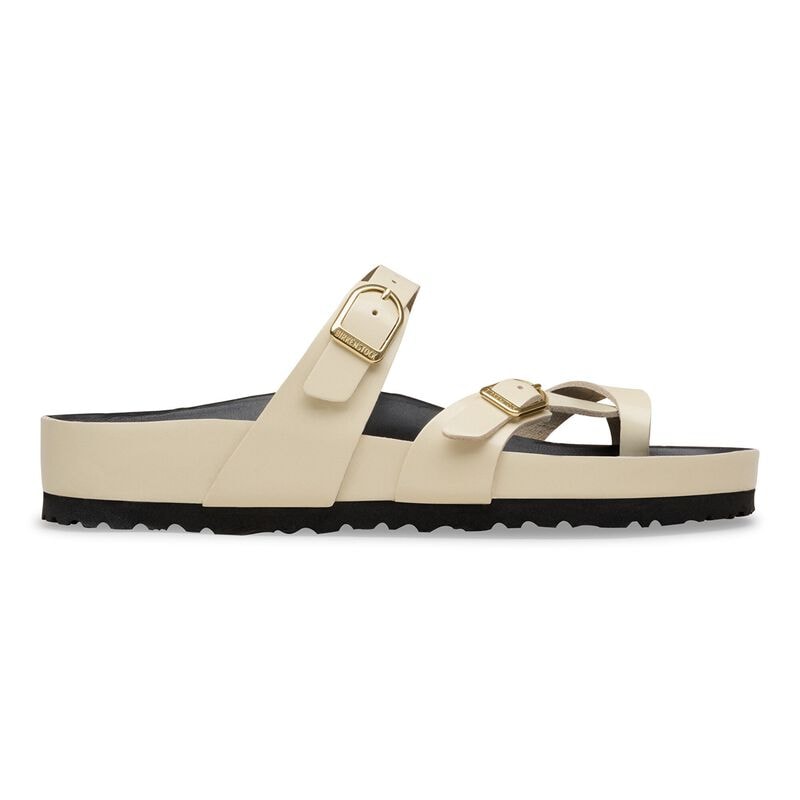
Hard floors—tile, concrete, hardwood—are less forgiving than carpet or grass. The cork footbed provides some shock absorption, but it's not a thick foam midsole. On hard surfaces, you'll feel more of the ground, which is actually good for foot strength and balance. However, during the break-in week, your feet may tire faster on hard floors. Keep your walks short and mix in softer surfaces when possible. If you're standing on concrete for long periods, consider wearing the Mayari for a few hours and then switching to another shoe. The patent leather outsole is durable but not cushioned like a running shoe. Pay attention to your heel strike: the heel cup should cradle your heel and keep it centered. If you feel slipping, tighten the instep strap slightly. By day seven, the cork should have started to take on the shape of your foot, especially in the heel and arch. The sandal will feel more stable and less like a plank.
How the Cork Footbed Molds to Your Foot
BIRKENSTOCK cork footbeds are made from a mix of cork and latex. Cork is harvested from the bark of cork oak trees, and latex is a natural rubber. Together they create a material that is both supportive and adaptable. When you walk, your body heat and the pressure of your steps cause the cork to compress slightly. Over time, the footbed develops a shallow impression of your foot: a dip in the heel, a rise under the arch, and a gentle curve under the toes. This process takes about a week of regular wear to become noticeable, and a few months to fully settle. The suede liner on top helps wick moisture and adds a soft feel. Don't worry if the footbed looks flat at first; it will change. Also, avoid leaving your sandals in a hot car or direct sunlight for long periods, as excessive heat can cause the cork to become brittle.
Strap Fit Tips for the Mayari
The Mayari's two-strap design is great for adjusting to different foot shapes, but it requires a bit of attention. Here are some practical tips:
- Start loose. Begin with both straps one hole looser than you think you need. As the footbed molds, your foot will sit lower, and the straps may feel tighter.
- Adjust the toe strap first. The strap across your toes should sit just behind the toe joints. It should not rub against your pinky toe or press on your bunions. If it does, loosen it.
- Then adjust the instep strap. This strap holds your foot back against the heel cup. It should be snug enough that your heel doesn't lift more than a quarter inch when you walk.
- Check after 10 minutes. Walk around for a few minutes, then recheck. Your feet may expand as they warm up.
- Use the buckle, not the holes, for micro-adjustments. The buckle allows you to tighten or loosen in smaller increments than moving the pin to a new hole.
Walking on Hard Floors: What to Expect
Hard floors are a common surface for city dwellers, office workers, and anyone with tile or wood at home. The Mayari handles them well, but the first week can be an adjustment. The cork footbed is firm, so you'll feel the floor more than you would in a sneaker. This can be tiring if you're not used to it. Here's how to make it easier:
- Take shorter steps. A shorter stride reduces the impact on your heels and knees.
- Land midfoot or forefoot. Try to avoid slamming your heel down. A gentle heel-to-toe roll is ideal.
- Take breaks. If you're on your feet all day, switch to another shoe for a few hours.
- Use a rug or mat. If you stand in one spot, a cushioned mat can help.
- Listen to your body. Soreness in your arches is normal for the first few days as your foot muscles adapt. Sharp pain is not—stop wearing them and consult a professional if it persists.
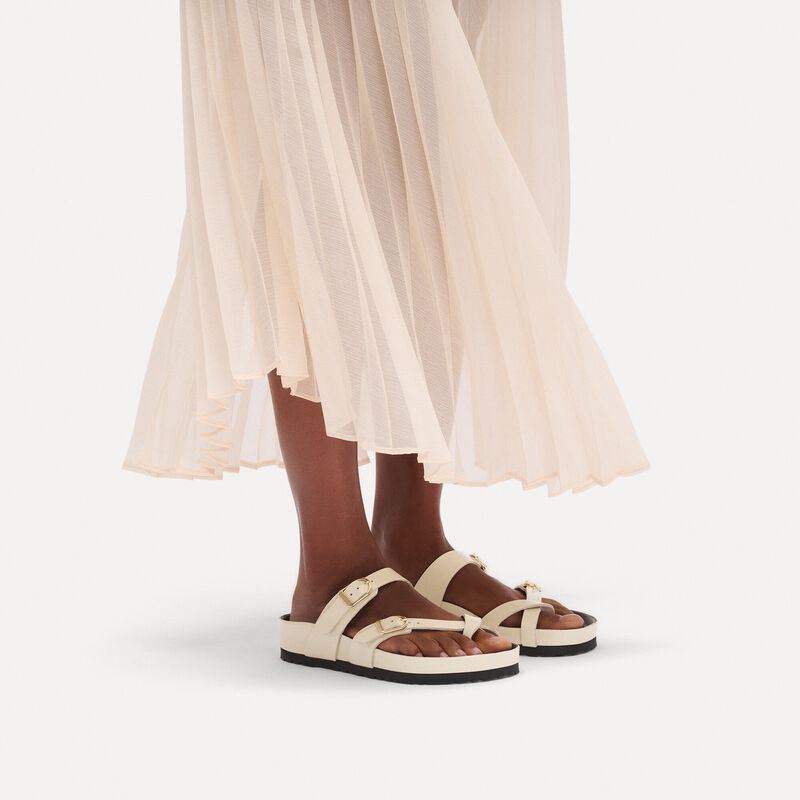
Color Options: High-Shine Black/Ecru and High-Shine Ecru/Black
The Mayari Natural Leather Patent comes in two colorways: High-Shine Black/Ecru and High-Shine Ecru/Black. The first has a black patent upper with ecru (a light cream) accents, likely on the footbed or buckle. The second reverses that: ecru patent upper with black accents. Both have a glossy finish that catches the light. The patent leather is smooth and easy to wipe clean with a damp cloth. If you want a sandal that looks dressy enough for a casual office or a dinner out, these colorways work well. The ecru/black combo is especially striking because the light upper contrasts with the dark footbed and hardware. Keep in mind that patent leather can show scuffs more easily than matte leather, but a quick buff with a soft cloth usually removes them.
Break-In Timeline at a Glance
Here's a simple timeline to guide your first week:
- Day 1: Wear 20–30 minutes indoors. Expect firmness. Adjust straps loose.
- Day 2: Wear 30–45 minutes. Footbed starts to warm. Check strap fit.
- Day 3: Wear 1 hour. Cork begins to compress slightly. Recheck buckles.
- Day 4: Wear 1–2 hours. Toe bar feels less intrusive. Straps may need tightening.
- Day 5: Wear 2–3 hours. Heel cup starts to cradle. Hard floors may feel more tiring.
- Day 6: Wear 3–4 hours. Noticeable molding in arch and heel. Adjust as needed.
- Day 7: Wear as long as comfortable. Footbed should feel noticeably more custom. Straps should be dialed in.
Care and Maintenance for Patent Leather and Cork
To keep your Mayari looking good and lasting long, follow these simple care steps. For the patent leather upper, wipe with a soft, damp cloth after each wear to remove dust and oils. Avoid using harsh chemicals or abrasive cleaners. For the cork footbed, keep it dry. If it gets wet, let it air dry away from direct heat. You can use a BIRKENSTOCK cork sealer occasionally to prevent the cork from drying out and cracking, especially if you live in a dry climate. The suede liner can be brushed gently with a suede brush to remove debris. Don't put your sandals in the washing machine or dishwasher. With proper care, the cork will mold to your foot and the patent leather will stay shiny for many seasons.
Final Thoughts: A Sandal That Rewards Patience
The Mayari Natural Leather Patent High-Shine Ecru/Black Trail Easy is not a instant-comfort shoe. It asks for a week of gradual wear to let the cork footbed adapt and the straps settle. But once that break-in period is over, you get a sandal that supports your foot, looks sharp, and handles hard floors with a natural, grounded feel. Pay attention to strap fit during the first few days, and don't rush the process. Whether you choose the High-Shine Black/Ecru or the High-Shine Ecru/Black, you're getting a BIRKENSTOCK classic with a polished twist. Give it a week, and your feet will thank you.
View this BIRKENSTOCK style in the shop
People also search
BIRKENSTOCK footbed packed out when to replace
BIRKENSTOCK suede vs nubuck which scuffs less
BIRKENSTOCK Boston for office casual dress code
how to choose BIRKENSTOCK width letter R or N
best color BIRKENSTOCK Arizona for everyday
BIRKENSTOCK Arizona metallic vs classic leather
BIRKENSTOCK Gizeh thong sandal vs Arizona two strap
BIRKENSTOCK cork latex footbed how long it lasts
BIRKENSTOCK sandals for sightseeing Europe cobblestones
how to know BIRKENSTOCK size from foot length
best BIRKENSTOCK for weekend travel packing
BIRKENSTOCK Boston suede water stains how to clean
how to stop heel slipping in BIRKENSTOCK Arizona
is BIRKENSTOCK Mayari Natural Leather Patent High-Shine Ecru/Black Trail Easy true to size
BIRKENSTOCK Mayari Natural Leather Patent High-Shine Ecru/Black Trail Easy sizing and width fit
BIRKENSTOCK Kyoto vs Boston clog comparison
BIRKENSTOCK cork footbed squeak how to fix
BIRKENSTOCK Arizona two strap too loose how to tighten
best BIRKENSTOCK for backyard home and errands
best color for BIRKENSTOCK Mayari Natural Leather Patent High-Shine Ecru/Black Trail Easy everyday wear
BIRKENSTOCK wide width sandals for high volume feet
BIRKENSTOCK EVA sandals for beach and pool
BIRKENSTOCK Arizona taupe vs stone vs black which to buy
how often to replace BIRKENSTOCK cork footbed
do BIRKENSTOCK sandals work without socks
are BIRKENSTOCK good for standing cooking at home
BIRKENSTOCK sizing guide regular vs wide width
BIRKENSTOCK Arizona for summer walking all day
BIRKENSTOCK Arizona vs Super-Birki garden clog
BIRKENSTOCK Boston taupe suede outfit ideas
Trending BIRKENSTOCK searches
Arizona vs Madrid
BIRKENSTOCK new colors
BIRKENSTOCK taupe suede
regular vs wide BIRKENSTOCK
break-in cork footbed
Boston vs Kyoto
ankle strap Milano
BIRKENSTOCK for work standing
BIRKENSTOCK 2026 trends
BIRKENSTOCK cobblestone walking
BIRKENSTOCK Boston clog
two strap sandal
Arizona vs Boston
BIRKENSTOCK Kyoto clog
Mayari Natural Leather Patent High-Shine Ecru/Black Trail Easy cork footbed
BIRKENSTOCK tobacco leather
BIRKENSTOCK EVA sandals
BIRKENSTOCK wide width
BIRKENSTOCK Mayari Natural Leather Patent High-Shine Ecru/Black Trail Easy
BIRKENSTOCK Big Buckle