



Function
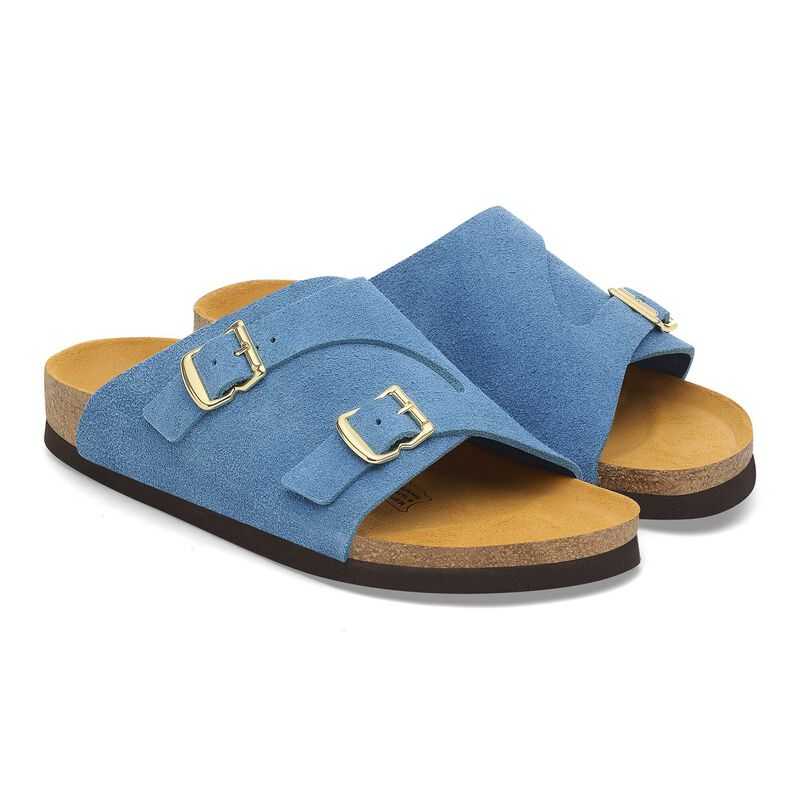
BIRKENSTOCK Zürich 1964 Suede Leather Light Blue City Comfort – First-Week Fit, Cork Break-In, and Hard-Floor Walking Notes · BIRKENSTOCK Everyday Walk
Slip into the BIRKENSTOCK Zürich 1964 Suede Leather Light Blue City Comfort and you’ll notice something immediately: the footbed feels firm, the suede wraps your foot like a gentle handshake, and the whole sandal has a quiet confidence that says “I’m built for real walking.” But the first week? That’s where the magic happens—if you let it. This isn’t a shoe you break in overnight. It’s a partnership. You bring patience, a willingness to adjust straps, and a few daily walks. The sandal brings its legendary cork footbed that slowly shapes itself to the curves of your foot.
Let’s talk about that cork footbed. BIRKENSTOCK has been perfecting this design for decades, and the Zürich 1964 carries that heritage proudly. The footbed is made of a blend of cork and latex, which is both supportive and responsive. But here’s the secret: cork needs time to mold. During the first week, you’ll feel the arch support pressing into your foot in ways that might feel unfamiliar. That’s normal. Your foot is literally leaving its imprint. If you walk on hard floors—tile, hardwood, concrete—you’ll notice that the footbed provides a buffer that feels firmer than foam, but more stable. It’s not squishy. It’s supportive. Think of it as a custom insole in the making.
Now, about that Light Blue suede. Suede is a natural material that breathes, flexes, and softens with wear. But it also has a break-in period. In the first few days, the suede might feel snug across the top of your foot. That’s where the strap fit comes in. The Zürich 1964 features two adjustable straps with metal buckles. You can fine-tune the fit at the instep and at the toes. Start by loosening the straps slightly—you want a secure fit, but not a tight one. You should be able to slide a finger under the strap while standing. As the suede softens and the cork molds, you’ll find that you might need to tighten the straps by a notch or two. That’s a good sign. It means the sandal is conforming to your foot.
First-Week Walking Plan: Hard Floors and City Streets
If you’re like me, you spend most of your day on hard floors—kitchen tile, office laminate, polished concrete. The Zürich 1964 handles these surfaces with grace. The lightweight EVA sole provides traction and shock absorption, while the cork footbed keeps your foot in a natural position. But during the first week, don’t expect to log 10,000 steps immediately. Your feet need to adjust to the lack of cushioning they might be used to. Start with short walks—30 minutes to an hour. Walk around your home, take a trip to the grocery store, stroll to the coffee shop. This gradual introduction allows the cork to warm up and begin molding without causing fatigue.
One tip: wear thin socks for the first few days if you’re prone to blisters. Socks can ease the friction against the suede. But for the true BIRKENSTOCK experience, go barefoot when you can. Your feet will grip the footbed naturally, and the cork will respond to your skin’s moisture and heat, accelerating the break-in. You’ll notice that after a few wears, the footbed develops a slight darkening where your heel sits—that’s the cork absorbing your foot’s unique oils. It’s a sign of progress.
Speaking of city streets, the Zürich 1964 is a versatile daily walker. It pairs with casual jeans, shorts, or even a light summer dress. But don’t let the fashionista in you overshadow the fitter. When you walk, pay attention to your gait. BIRKENSTOCK encourages a natural rolling motion from heel to toe. The raised toe bar—that little bump near the front—is there to encourage a natural gripping motion with your toes. In the first week, you might feel that toe bar more than you will later. It’s not a flaw; it’s a feature. Your toes will learn to grip, which strengthens your foot muscles and improves overall stability. That’s especially helpful on hard floors, where you need a solid base.
Strap Fit: The Golden Rules
Let’s dive deeper into strap adjustments. The Zürich 1964 has two straps. The first is at the instep (the top of your foot). The second is at the toe area. Both should be snug enough that your foot doesn’t slide forward when you walk, but loose enough that you can wiggle your toes. If the straps are too tight, they’ll press into the suede and your foot, causing discomfort. If they’re too loose, your foot will slide, causing friction and potential blisters. The sweet spot is a fit that feels like a handshake—firm but friendly.
On the first day, set the straps to a medium looseness. Walk around for 15 minutes. Then, re-evaluate. You might find that the instep strap feels tight as the suede flexes. Loosen it a notch. After a few days, as the cork forms, you might need to tighten. I always advise my friends to carry a small screwdriver or coin during the first week to make quick adjustments. The buckles are sturdy and easy to modify. Once you find your perfect fit, you’ll forget you’re wearing them—until you look down and see that gorgeous Light Blue suede.
One more thing about suede: it’s durable, but it requires a little love. If you get caught in a light rain, don’t panic. Blot the moisture with a dry cloth and let the sandals air dry away from direct heat. Use a suede brush to restore the nap. But during the break-in week, you’re likely to notice that the suede softens and develops a subtle patina that’s uniquely yours. That’s the beauty of natural materials.
The Cork Footbed: Patience Pays Off
If you’ve never worn BIRKENSTOCK before, the cork footbed might feel like a brick compared to your marshmallow sneakers. But give it time. The cork is a natural shock absorber, and it’s shaped to support your arches and distribute pressure evenly. In the first week, you might feel some discomfort in your arches or heels. That’s your foot adjusting to a more natural alignment. If you have flat feet or high arches, the transition can take longer. But don’t give up. The footbed is designed to support your foot’s natural shape, not to force it into an unnatural one.
To speed up the break-in, you can use a technique called "hand molding." Press your thumbs firmly into the cork where your heel and arch will rest. This warms the cork and makes it more pliable. But be gentle—you don’t want to dent it. Also, wear your sandals around the house for an hour each evening. This is the best way to break them in without walking long distances. Your body heat softens the cork, and your weight begins the molding process.
After a week or two, you’ll notice that the footbed has developed a slight depression that cradles your foot. That’s the sign of a successful break-in. From that point on, every step feels custom.
Hard Floors: The Daily Grind
Whether you’re standing at the kitchen counter preparing a meal, walking across marble in a museum, or navigating the polished concrete of a modern office, the Zürich 1964 is up for the task. The cork footbed provides excellent insulation from cold floors—your feet won’t feel that chill in the morning. And the suede lining adds a touch of warmth. But the real benefit is the reduction in joint impact. Unlike hard soles that send shock waves up your legs, the cork absorbs and distributes the pressure. Many wearers report less foot fatigue after a day on hard floors when wearing BIRKENSTOCK.
For standing tasks, shift your weight periodically. BIRKENSTOCK encourages micro-movements because they promote circulation. The toe bar encourages your toes to spread and grip, which helps maintain balance. If you’re new to this, you might feel a slight muscle ache in your calves or arches. That’s your foot and leg muscles waking up. In a few weeks, you’ll likely feel stronger and more stable.
Colorway and Style Notes
While this product note focuses on the Light Blue suede, the Zürich 1964 is available in other rich colors: Dark Red, Light Green, and Dark Green. Each color has its own personality. The Light Blue is soft and airy, perfect for spring and summer. Dark Red is bold and warm, a statement piece. Light Green is fresh and unexpected, and Dark Green is earthy and versatile. No matter which shade you choose, the suede texture is consistent—velvety and plush. And the silver-tone buckles add a touch of classic BIRKENSTOCK style.
When pairing with your wardrobe, think about the colors that dominate your closet. Light Blue works beautifully with neutrals like white, beige, and denim. Dark Red adds a pop of color to black or grey. Light Green is a conversation starter, while Dark Green pairs well with earth tones. But fit always comes first. With the right adjustments, any color will feel great.
Final Thoughts for Your First Week
Your BIRKENSTOCK Zürich 1964 Suede Leather sandals are more than just footwear—they’re an investment in your foot health. The first week is a period of transition. Expect some tightness, some unfamiliar pressure, and maybe even a little impatience. But if you follow the practical tips in this guide—start slow, adjust straps, let the cork mold—you’ll be rewarded with a pair of sandals that feel like they were made for you. Walk on hardwood floors, stand at your kitchen sink, and stroll through city streets. Your feet will thank you.
Remember: BIRKENSTOCK is not about instant gratification. It’s about the long-term comfort that comes from natural materials and thoughtful design. The Zürich 1964 is a prime example. In just a few weeks, the cork footbed will conform to your arches, the suede will soften, and the straps will settle into the perfect positions. And when that happens, you won’t want to take them off.
So go ahead—embrace the break-in. Walk a little more each day, adjust as needed, and enjoy the journey. Your feet are about to experience a level of comfort that only comes from a true BIRKENSTOCK. Whether you chose Light Blue, Dark Red, Light Green, or Dark Green, you’ve made the right choice. Happy walking.
View this BIRKENSTOCK style in the shop
People also search
BIRKENSTOCK Boston for office casual dress code
BIRKENSTOCK Arizona white Birko-Flor scuff care
BIRKENSTOCK Arizona for men first pair guide
BIRKENSTOCK Gizeh regular vs platform
BIRKENSTOCK cork footbed squeak how to fix
BIRKENSTOCK Arizona white vs black everyday wear
best BIRKENSTOCK for city walking tour
best BIRKENSTOCK sandals for standing all day at work
best color BIRKENSTOCK Arizona for everyday
BIRKENSTOCK kids vs adult sizing for small feet
best BIRKENSTOCK clog for indoor and outdoor
best BIRKENSTOCK for airport travel and long flights
is BIRKENSTOCK Zürich 1964 Suede Leather Light Blue City Comfort true to size
BIRKENSTOCK Arizona for summer walking all day
BIRKENSTOCK Arizona taupe vs stone vs black which to buy
BIRKENSTOCK Zürich 1964 Suede Leather Light Blue City Comfort vs Arizona for walking
BIRKENSTOCK footbed technology cork and latex
BIRKENSTOCK Arizona vegan Birko-Flor vs leather
BIRKENSTOCK Birko-Flor vs leather which lasts longer
BIRKENSTOCK Boston break in time first week
BIRKENSTOCK footbed sandals break-in no blisters
BIRKENSTOCK Arizona outfit with linen summer clothes
BIRKENSTOCK Boston clog with socks in cold weather
BIRKENSTOCK Arizona regular width vs wide fit guide
BIRKENSTOCK Boston fit compared to Arizona
how to break in BIRKENSTOCK Zürich 1964 Suede Leather Light Blue City Comfort cork footbed
BIRKENSTOCK Arizona oiled leather darkens over time
BIRKENSTOCK Arizona metallic vs classic leather
BIRKENSTOCK Arizona Big Buckle vs classic Arizona
BIRKENSTOCK sandals for sightseeing Europe cobblestones
Trending BIRKENSTOCK searches
BIRKENSTOCK for work standing
BIRKENSTOCK Birko-Flor
BIRKENSTOCK taupe suede
contoured cork-latex footbed
BIRKENSTOCK new colors
BIRKENSTOCK Zürich 1964 Suede Leather Light Blue City Comfort
oiled leather clog care
BIRKENSTOCK EVA sandals
BIRKENSTOCK airport shoes
BIRKENSTOCK Boston clog
regular vs wide BIRKENSTOCK
BIRKENSTOCK Mayari
Birkenstock clog socks
Boston vs Kyoto
BIRKENSTOCK Gizeh
BIRKENSTOCK 2026 trends
BIRKENSTOCK Madrid sandal
BIRKENSTOCK soft footbed
BIRKENSTOCK Arizona
BIRKENSTOCK wide width