



Function
Glenda en cuir nubuck Elemental Blue Trail Easy : rodage de la semelle en liège la première semaine, ajustement des brides et marche sur sol dur | BIRKENSTOCK Everyday Walk
Getting Real About the First Week
You just unboxed the Glenda Nubuck Leather in Elemental Blue Trail Easy, and you're probably wondering what the next seven days will feel like. The cork footbed is the heart of every BIRKENSTOCK, and it doesn't mold overnight. It responds to heat, pressure, and the way you walk. The first week is a conversation between your feet and the footbed. The Glenda's nubuck leather upper adds its own character: soft, slightly fuzzy, and ready to flex. This guide walks you through the break-in on hard floors, how to get the strap fit right, and what to expect when you take them out for short errands or a weekend trip. No hype, just practical notes from someone who has worn BIRKENSTOCK through many first weeks.
Why the Cork Footbed Feels Firm at First
Out of the box, the cork footbed is firm and a little unforgiving. That's normal. Cork is a natural material that softens with body heat. During the first few wears, the footbed begins to warm up and compress slightly under your heel and the ball of your foot. You might notice a slight ridge under your arch that feels more pronounced than expected. That's the footbed's anatomical shape doing its job. It's not a defect. The Elemental Blue Trail Easy colorway uses the same cork-latex core as every BIRKENSTOCK, so the break-in timeline is similar: about one to two weeks of regular wear for the footbed to start feeling custom. The nubuck leather upper also softens, but it doesn't stretch out of shape. Instead, it creases gently where your foot flexes.
Days 1–3: Short Wear Sessions Are Key
Don't plan a full day of walking on day one. Start with 20 to 30 minutes around the house. Wear them while you make coffee, sort laundry, or answer emails at a standing desk. The goal is to let your feet and the footbed get acquainted without hot spots. If you feel pressure on the top of your foot, check the strap. The Glenda has a single strap across the instep, and it's easy to overtighten. You want the strap snug enough that your foot doesn't slide, but loose enough to slip a finger underneath. Nubuck leather has a little give, so it will relax slightly after a few wears. On day two, add another 30-minute session. By day three, you can try a short walk to the mailbox or around the block. Pay attention to how your heel sits in the heel cup. It should feel cradled, not squeezed.
Days 4–7: Expanding Your Range
By the middle of the first week, the cork footbed starts to show faint impressions of your heel and toes. You might see a slight darkening where your foot presses most. That's the cork adapting. Now you can extend wear time to an hour or two. Try walking on different surfaces: carpet, tile, concrete. Hard floors are the real test. On tile or concrete, the footbed's firmness is more noticeable because there's no give underfoot. That's actually helpful for break-in because it encourages your foot to settle into the footbed's contours. If you're on your feet a lot at home, wear the Glenda for a morning and then switch to another shoe for the afternoon. By day seven, many people find the footbed has softened enough to feel comfortable for a full day of light activity. The nubuck leather will have molded to the shape of your instep, and the strap will have taken a set.
Walking on Hard Floors: What to Expect
Hard floors—wood, tile, laminate, concrete—are where the cork footbed proves its worth. Unlike soft foam, cork doesn't bottom out. It supports your arch and heel without sinking. During the first week, you may feel a slight ache in your arches after standing for a while. That's usually a sign that your feet are working a little differently than they do in cushioned sneakers. It should fade as the footbed molds. If you're walking on concrete for more than an hour, take breaks. The Glenda's outsole is flexible but not heavily cushioned, so it's best for city streets, home floors, and light trails. For weekend travel, pack them as your primary walking shoe if you're used to BIRKENSTOCK, or as a recovery shoe if you're breaking them in. The Elemental Blue nubuck is dark enough to hide scuffs but light enough to show the texture.
Strap Fit: The Single Strap Done Right
The Glenda's strap is adjustable, and getting it right makes a huge difference. Here's a simple method: loosen the strap completely, slide your foot in, and then tighten until you feel light resistance. Wiggle your toes. Your foot should not slide forward when you walk. If it does, tighten one more notch. If the strap digs into the top of your foot, loosen it. Nubuck leather will soften, but it won't stretch much in length. The strap should sit comfortably across the instep, not on your ankle bone. For wider feet, consider sizing up if you're between sizes, because the strap won't accommodate a very high instep. For narrow feet, the strap can be tightened enough to keep the foot secure. Remember that the footbed has a break-in period, so the fit will feel slightly different after a week. Recheck the strap after a few days.
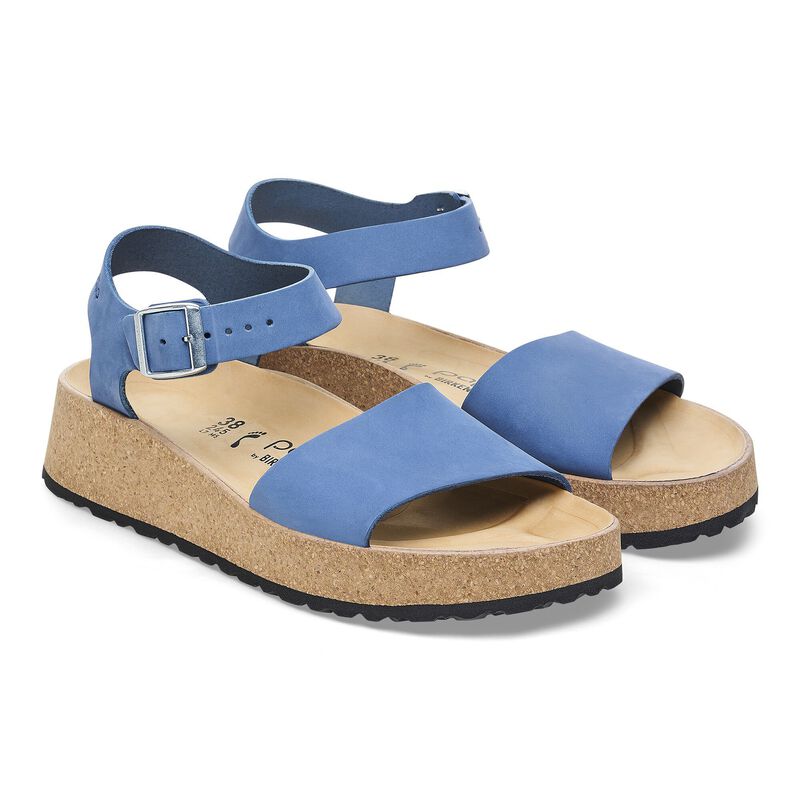
Color Notes for the Glenda Nubuck Leather
The Glenda comes in Black, Sandcastle, Pecan, Boysenberry, Elemental Blue, Dark Tea, and Pure Sage. Elemental Blue is a muted, dusty blue that pairs well with denim and neutral tones. Black is classic and hides wear. Sandcastle is a light tan that shows scuffs more easily but looks great with warm weather outfits. Pecan is a rich brown that ages nicely. Boysenberry is a deep purple-red that adds a pop of color. Dark Tea is a dark brown that works for both casual and slightly dressier settings. Pure Sage is a soft green that feels earthy and calm. All colors use the same nubuck leather, so the break-in experience is consistent. Nubuck is more susceptible to water stains than smooth leather, so consider a protective spray if you live in a wet climate.
Weekend Travel and Everyday Wear
Once you're past the first week, the Glenda becomes a reliable everyday shoe. It's light enough to pack for a weekend trip, and the cork footbed provides support for walking tours or airport terminals. The nubuck leather is breathable, so it works in warm weather, but it's not waterproof. If you're traveling, wear them on the plane to save space and keep your feet comfortable. At home, they're great for standing at the kitchen counter or working at a standing desk. The Elemental Blue color is versatile enough for casual outfits. Just remember that the footbed continues to mold for several weeks, so the fit gets better with time. Don't judge them after one day.
Common First-Week Questions
Will the footbed feel hard forever? No. The cork softens with heat and pressure. Give it a week of regular wear.
Can I wear them all day right away? You can, but you'll likely get sore arches. Short sessions are better.
How tight should the strap be? Snug enough to keep your foot from sliding, but you should be able to slip a finger under it.
What if the strap rubs? Loosen it. If it still rubs, try wearing socks for a few days to reduce friction.
Do I need to break them in on hard floors? Not necessarily, but hard floors help the footbed mold because your foot presses more directly into the cork.
Final Thoughts
The Glenda Nubuck Leather Elemental Blue Trail Easy is a straightforward BIRKENSTOCK with a classic cork footbed. The first week is about patience and small adjustments. Wear them for short periods, keep the strap comfortably snug, and walk on a variety of surfaces. By day seven, you'll feel the footbed start to respond to your feet. The nubuck leather will soften and crease in the right places. And the Elemental Blue color will look even better with a little wear. Whether you're on city streets, home floors, or a weekend getaway, these shoes reward a thoughtful break-in. Take it slow, and they'll take care of your feet for a long time.
View this BIRKENSTOCK style in the shop
People also search
BIRKENSTOCK men women unisex sizing how to choose
BIRKENSTOCK Boston taupe suede outfit ideas
BIRKENSTOCK footbed packed out when to replace
BIRKENSTOCK Arizona Big Buckle vs classic Arizona
best BIRKENSTOCK for backyard home and errands
BIRKENSTOCK Arizona white Birko-Flor scuff care
BIRKENSTOCK cork latex footbed how long it lasts
best BIRKENSTOCK for weekend travel packing
BIRKENSTOCK footbed sandals for standing on hard floors
BIRKENSTOCK Glenda Nubuck Leather Elemental Blue Trail Easy sizing and width fit
BIRKENSTOCK Arizona regular width vs wide fit guide
BIRKENSTOCK Arizona vegan Birko-Flor vs leather
BIRKENSTOCK Boston suede water stains how to clean
BIRKENSTOCK Mayari toe loop vs Gizeh fit
BIRKENSTOCK Arizona for men first pair guide
are BIRKENSTOCK good for standing cooking at home
BIRKENSTOCK Arizona outfit with linen summer clothes
how to store BIRKENSTOCK cork footbed between seasons
are BIRKENSTOCK sandals good for cobblestone city streets
are BIRKENSTOCK cork footbed sandals good for all-day walking
best BIRKENSTOCK sandals for standing all day at work
how to choose BIRKENSTOCK width letter R or N
BIRKENSTOCK suede vs nubuck which scuffs less
BIRKENSTOCK Arizona vs Boston which is better for walking
BIRKENSTOCK sandals for plantar comfort walking
BIRKENSTOCK Arizona two strap sandal fit true to size
BIRKENSTOCK Arizona vs Milano for ankle support
how to stop heel slipping in BIRKENSTOCK Arizona
BIRKENSTOCK EVA sandals for beach and pool
BIRKENSTOCK Arizona midnight vs black oiled leather
Trending BIRKENSTOCK searches
BIRKENSTOCK last chance
BIRKENSTOCK Mayari
BIRKENSTOCK cobblestone walking
two strap sandal
Arizona vs Madrid
BIRKENSTOCK EVA sandals
BIRKENSTOCK tobacco leather
BIRKENSTOCK for work standing
Glenda Nubuck Leather Elemental Blue Trail Easy cork footbed
BIRKENSTOCK black Arizona
summer BIRKENSTOCK outfits
Boston vs Kyoto
BIRKENSTOCK Milano
BIRKENSTOCK Big Buckle
BIRKENSTOCK sizing
BIRKENSTOCK taupe suede
BIRKENSTOCK platform Arizona
BIRKENSTOCK Glenda Nubuck Leather Elemental Blue Trail Easy
BIRKENSTOCK Kyoto clog
thong sandal Gizeh