



Function
Kyoto Suede Leather Thyme Walk Edit: Adaptación en la primera semana, ajuste de correas y caminar sobre suelos duros | BIRKENSTOCK Everyday Walk
Why the Kyoto Suede Leather Deserves a Spot in Your Everyday Rotation
The BIRKENSTOCK Kyoto is a streamlined, closed-toe silhouette that works for city streets, home floors, and weekend travel. This Walk Edit focuses on the Thyme and Deep Turquoise suede leather versions, because suede gives the shoe a softer, more flexible feel from the first step. If you are new to BIRKENSTOCK or new to the Kyoto, the first week is when the magic happens: the cork footbed starts to respond to your weight and walking pattern, the suede upper relaxes across the top of your foot, and the strap lets you dial in a secure fit without pressure points. Below, we break down what to expect day by day, how to fine-tune the strap, and why hard floors are actually a great training ground for your footbed.
What Makes the Cork Footbed Different
At the heart of every BIRKENSTOCK is the cork footbed. It is not a slab of foam; it is a layered construction that includes cork, latex, and jute, topped with a suede lining. Cork is naturally resilient and slightly elastic, so it adapts to the shape of your foot over time. That is why a new pair can feel firm at first. The footbed is designed to support your arch, cradle your heel, and give your toes room to spread. In the Kyoto, this footbed sits inside a suede upper that wraps around your foot, so the break-in is a two-part process: the footbed molds from below, and the suede stretches from above.
First Week, Day by Day: What to Expect
Day 1: Put them on and walk around your home for 20–30 minutes. The cork footbed will feel firm, especially under your heel and along the arch. This is normal. The suede upper should feel snug but not tight. If you feel pressure on the top of your foot, loosen the strap one notch.
Day 2–3: Wear them for a short errand or a walk around the block. You may notice the footbed starting to warm up and soften slightly. The suede will begin to crease where your foot flexes. That is a good sign—it means the upper is adapting to your gait.
Day 4–5: By now, the heel cup should feel more familiar. The arch support may feel less aggressive as the cork compresses in the spots where you apply the most pressure. If you have been wearing them on hard floors, you might feel a gentle fatigue in your feet at the end of the day. That is your muscles adjusting to the active support.
Day 6–7: The Kyoto should start to feel like yours. The suede will have stretched just enough to accommodate your foot's width, and the footbed will have a slight imprint of your heel and toes. You can now wear them for longer stretches—a full day at home, a trip to the store, or a casual walk.
Strap Fit: How to Get It Right
The Kyoto features an adjustable strap across the instep. This strap is your main tool for customizing the fit. Here is how to use it:
1. Start with the buckle in the middle hole. This gives you room to tighten or loosen as the suede stretches.
2. Slide your foot in. Your heel should sit into the heel cup, and your toes should have about a finger's width of space at the front.
3. Adjust the strap so it feels snug but not tight. You should be able to slide one finger under the strap. If it leaves a mark on your foot, it is too tight. If your foot lifts out of the shoe when you walk, it is too loose.
4. Recheck after 20 minutes. Suede softens with warmth. What felt perfect in the morning might feel loose by afternoon. Adjust as needed.
Remember that the strap works together with the footbed. If the footbed is still firm and your foot sits high in the shoe, you might need the strap slightly looser. As the footbed molds and your foot settles deeper, you may need to tighten the strap a notch.
Walking on Hard Floors: Why It Helps
Hard floors—wood, tile, concrete—are actually ideal for breaking in a BIRKENSTOCK. Unlike carpet, which can mask instability, hard surfaces give you clear feedback about how the footbed supports your foot. You will feel the arch and heel cup working immediately. This feedback helps the cork adapt faster because your foot is making consistent, firm contact with the footbed.
Start with short sessions on hard floors: 15 minutes in the kitchen while you make coffee, or a walk down the hallway. As the footbed softens, extend your time. If you feel soreness in your arches, take a break. The goal is gradual adaptation, not endurance. For weekend travel, pack your Kyotos and wear them on hard airport floors and city sidewalks. The varied surfaces will help the footbed mold to your foot even faster.
Suede Leather: Care and Character
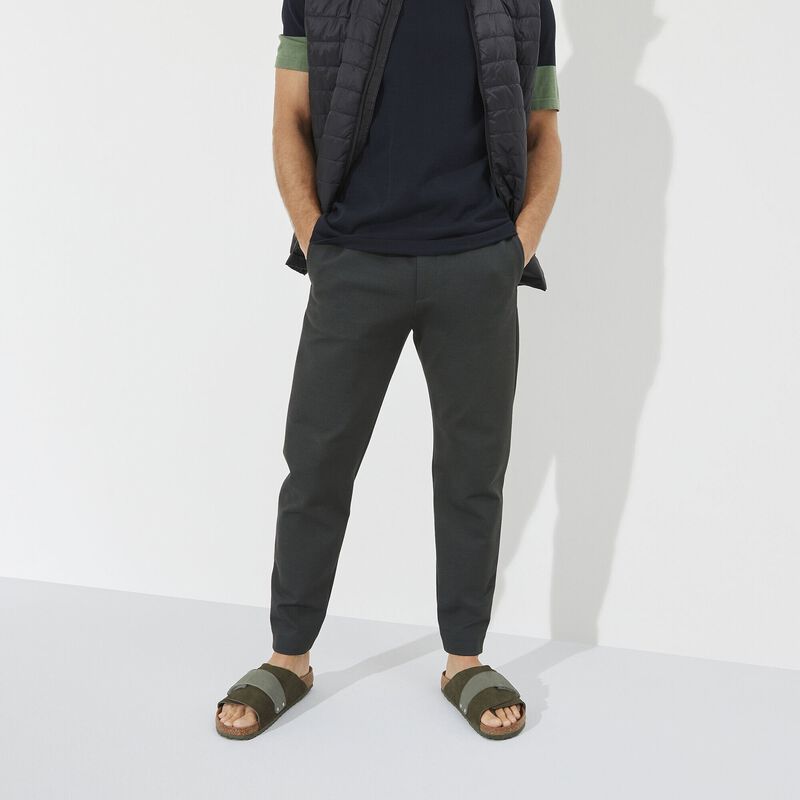
The Kyoto in suede leather has a soft, matte finish that looks casual and feels gentle against the skin. Suede is more flexible than smooth leather, so it tends to break in with fewer hot spots. The Thyme color is an earthy, muted green that pairs well with denim, chinos, and neutral tones. Deep Turquoise is a richer, more saturated blue-green that adds a subtle pop of color to an outfit. Both colors will develop a patina over time—light creasing and a slightly worn look that is part of the suede's charm.
To care for suede, brush it occasionally with a suede brush to remove dust and revive the nap. Avoid wearing them in heavy rain or snow. If they get wet, let them air dry away from direct heat. A suede protector spray can help repel stains, but always test it on a small area first.
Width and Sizing: What to Know
BIRKENSTOCK offers the Kyoto in a regular width and a narrow width. If you have wider feet or a high instep, the regular width is usually the better choice. If you have narrower feet or a low instep, the narrow width can provide a more secure fit. The suede upper will stretch slightly, so if you are between sizes, consider sizing down for a snugger initial fit. However, if you have long toes or prefer extra room, stick with your usual size. The most important thing is that your heel sits comfortably in the heel cup and your toes are not pressed against the front.
Break-In Tips for the First Week
1. Wear them at home first. This lets you adjust the strap and get used to the footbed without pressure.
2. Use socks if you need to. Thin socks can reduce friction during the first few days. Once the suede softens, you can go barefoot.
3. Alternate with other shoes. Give your feet and the footbed a rest. The cork needs time to cool and set.
4. Don't force it. If you feel sharp pain, stop. BIRKENSTOCK footbeds are supportive, but they should not hurt. Persistent pain may mean you need a different size or width.
5. Be patient. The first week is an investment. After that, the Kyoto will feel like a custom shoe.
Where the Kyoto Fits in Your Day
The Kyoto is a versatile shoe that works for many situations. At home, it is a comfortable alternative to slippers that supports your feet while you cook, clean, or work at a standing desk. On city streets, the closed toe protects your feet while the suede upper keeps the look relaxed. For weekend travel, it is easy to pack and works with everything from jeans to casual dresses. The cork footbed and suede leather combination means you get BIRKENSTOCK's legendary comfort in a sleek, everyday silhouette.
Final Thoughts on the Thyme and Deep Turquoise Walk Edit
The Kyoto Suede Leather in Thyme and Deep Turquoise is a smart choice for anyone who wants a closed-toe BIRKENSTOCK that feels broken-in quickly. The first week is all about small adjustments: loosening or tightening the strap, wearing them for short periods on hard floors, and letting the cork footbed do its job. By day seven, you will notice the footbed has started to contour to your foot, the suede has relaxed, and the shoe feels less like a new purchase and more like an old favorite. Whether you choose the earthy Thyme or the vibrant Deep Turquoise, you are getting a shoe that supports your foot and fits your life.
View this BIRKENSTOCK style in the shop
People also search
BIRKENSTOCK sizing guide regular vs wide width
BIRKENSTOCK Arizona vs Super-Birki garden clog
BIRKENSTOCK Madrid big buckle trend 2026
how to store BIRKENSTOCK cork footbed between seasons
BIRKENSTOCK sizing EU to US conversion chart
BIRKENSTOCK Arizona Big Buckle vs classic Arizona
BIRKENSTOCK Arizona midnight vs black oiled leather
best BIRKENSTOCK for city walking tour
how to know BIRKENSTOCK size from foot length
are BIRKENSTOCK good for standing cooking at home
BIRKENSTOCK cork latex footbed how long it lasts
BIRKENSTOCK suede vs nubuck which scuffs less
how to choose BIRKENSTOCK width letter R or N
how often to replace BIRKENSTOCK cork footbed
BIRKENSTOCK EVA sandals for beach and pool
BIRKENSTOCK Boston break in time first week
BIRKENSTOCK Arizona vs Milano for ankle support
best color for BIRKENSTOCK Kyoto Suede Leather Thyme Walk Edit everyday wear
do BIRKENSTOCK sandals run small or large
how to clean BIRKENSTOCK Birko-Flor without damage
do BIRKENSTOCK sandals work without socks
BIRKENSTOCK sandals for plantar comfort walking
best BIRKENSTOCK sandals for standing all day at work
BIRKENSTOCK Arizona regular width vs wide fit guide
are BIRKENSTOCK cork footbed sandals good for all-day walking
BIRKENSTOCK Gizeh regular vs platform
BIRKENSTOCK footbed sandals break-in no blisters
BIRKENSTOCK Boston vs Milano which for commute
how to stretch tight BIRKENSTOCK sandals at home
how to break in BIRKENSTOCK Kyoto Suede Leather Thyme Walk Edit cork footbed
Trending BIRKENSTOCK searches
BIRKENSTOCK city walking
BIRKENSTOCK new colors
ankle strap Milano
summer BIRKENSTOCK outfits
BIRKENSTOCK vegan Birko-Flor
BIRKENSTOCK shearling Boston
BIRKENSTOCK original footbed
BIRKENSTOCK cork footbed
BIRKENSTOCK white Arizona
BIRKENSTOCK airport shoes
BIRKENSTOCK last chance
Kyoto Suede Leather Thyme Walk Edit oiled leather
BIRKENSTOCK cobblestone walking
oiled leather clog care
BIRKENSTOCK Arizona
BIRKENSTOCK tobacco leather
BIRKENSTOCK Boston clog
Arizona vs Boston
BIRKENSTOCK taupe suede
Boston vs Kyoto