



Function
Boston Mixed Leather Concrete Gray Lounge Fit: adaptación de la plantilla de corcho la primera semana, ajuste de las correas y caminar sobre suelos duros | BIRKENSTOCK Everyday Walk
Why the Boston Mixed Leather Concrete Gray Lounge Fit Feels Different in Week One
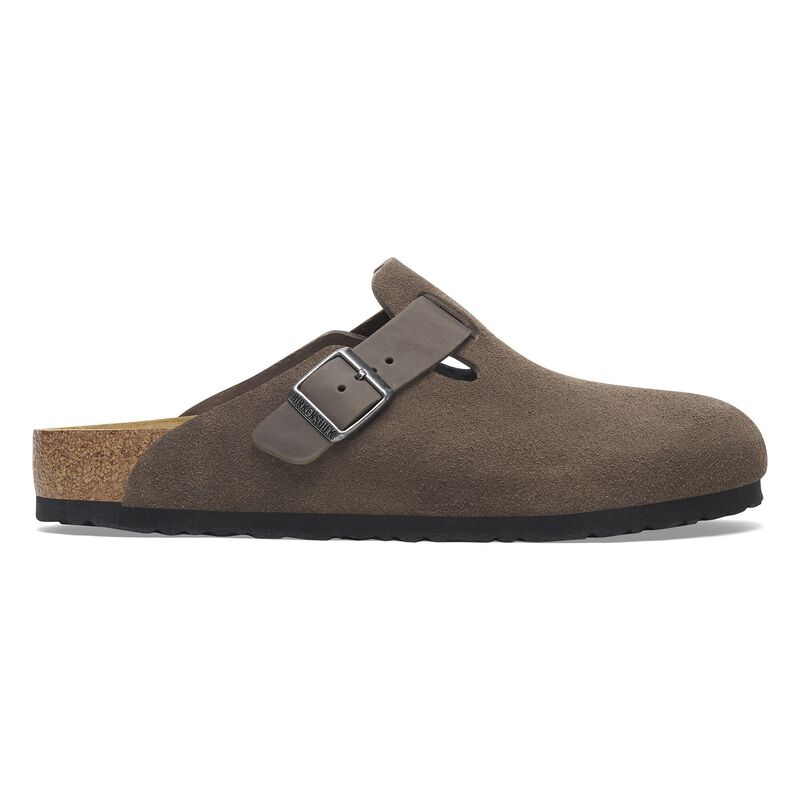
The BIRKENSTOCK Boston Mixed Leather in Concrete Gray Lounge Fit is a clog that asks for a little patience and gives back a lot of comfort. That Concrete Gray mixed leather upper looks understated on city streets, but the real story is under your foot. The cork footbed starts firm. It should. That firmness is what lets the footbed adapt to your stride instead of the other way around. In the first week, you are not just wearing a shoe; you are training a footbed. The Lounge Fit width gives a bit more room across the top, which helps if you have a wider forefoot or just prefer a relaxed feel. But relaxed does not mean sloppy. The strap across the instep is adjustable, and that adjustment is the difference between a clog that flops and a clog that walks with you.
Color matters less for fit, but it matters for how you use the shoe. Concrete Gray is the neutral anchor of this lineup. It hides scuffs from daily wear and pairs with denim, chinos, or lounge pants without shouting. If you want a warmer tone, Cognac brings out the leather grain. Faded Khaki leans casual and dusty. Charcoal is nearly black without the harshness. Thyme is a muted green that works with earth tones. Midnight Blue and New Navy are deep and easy to keep clean. Dark Tea is a rich brown that ages well. Each color shares the same cork footbed and the same break-in curve, so pick the one that fits your wardrobe and then focus on the fit.
Day 1 to Day 3: The Cork Footbed Starts to Talk
When you first slide into the Boston Mixed Leather, the cork footbed will feel hard and a little cool. That is normal. Cork is a natural material, and it responds to heat and pressure. In the first three days, wear them for short stretches: a morning coffee run, a trip to the mailbox, an hour at your desk. You want the cork to warm up and begin to soften under your heel and the ball of your foot. Do not stand in them for six hours on day one. The footbed needs to mold gradually. You might notice a slight ridge under your arch. That is the footbed doing its job. If it feels sharp, you are probably standing too long too soon. Give it twenty minutes, then take them off. Repeat.
The mixed leather upper also starts to relax. Leather has memory. The Concrete Gray finish will crease where your foot flexes, and those creases are not a defect; they are the shoe learning your shape. If you chose Cognac or Dark Tea, the creases will show a lighter tone underneath, which many people like. If you chose Charcoal or Midnight Blue, the creases are subtler. Either way, the upper and the footbed are breaking in together. By day three, you should feel the cork giving slightly under your heel. That is your cue to start wearing them for longer walks.
Dialing In the Strap Fit on the Boston Clog
The Boston has one adjustable strap across the instep. That strap is not just decoration. It controls how much your foot lifts inside the clog and how much the footbed can do its work. Too loose, and your heel will slide, causing friction and hot spots. Too tight, and you cut off circulation and press your foot into the cork unevenly. The sweet spot is snug but not tight: you should be able to slide one finger under the strap without forcing it. Do this adjustment while standing, because your foot spreads when you put weight on it. Sit down, unbuckle, step in, then buckle while standing. Walk ten steps. If your heel lifts more than a quarter inch, tighten one notch. If you feel pressure on the top of your foot, loosen one notch.
Remember that the leather will stretch slightly as it breaks in. So start a little snugger than feels perfect. After a week, you may need to tighten another notch. The Concrete Gray mixed leather is supple but holds its shape, so the strap will not stretch out endlessly. If you have a high instep, the Lounge Fit width gives you more room to work with. If you have a narrow foot, you may need to use the tighter holes. The goal is to keep your foot centered over the cork footbed so the arch and heel cup line up with your anatomy.
Walking on Hard Floors: What the Cork Footbed Does
Hard floors are where the Boston Mixed Leather proves itself. Concrete, tile, hardwood, and laminate do not absorb shock. They send it right back up your legs. The cork footbed is your shock absorber, but only after it has adapted to your weight and gait. In the first week, walking on hard floors will feel firm. Your knees and lower back might notice. That is not a reason to give up; it is a reason to pace yourself. Wear the Bostons for thirty minutes on hard floors, then switch to a softer surface or take them off. As the cork compresses and molds, the footbed becomes a custom arch support. By the end of week one, you should feel a difference: less jarring, more rebound.
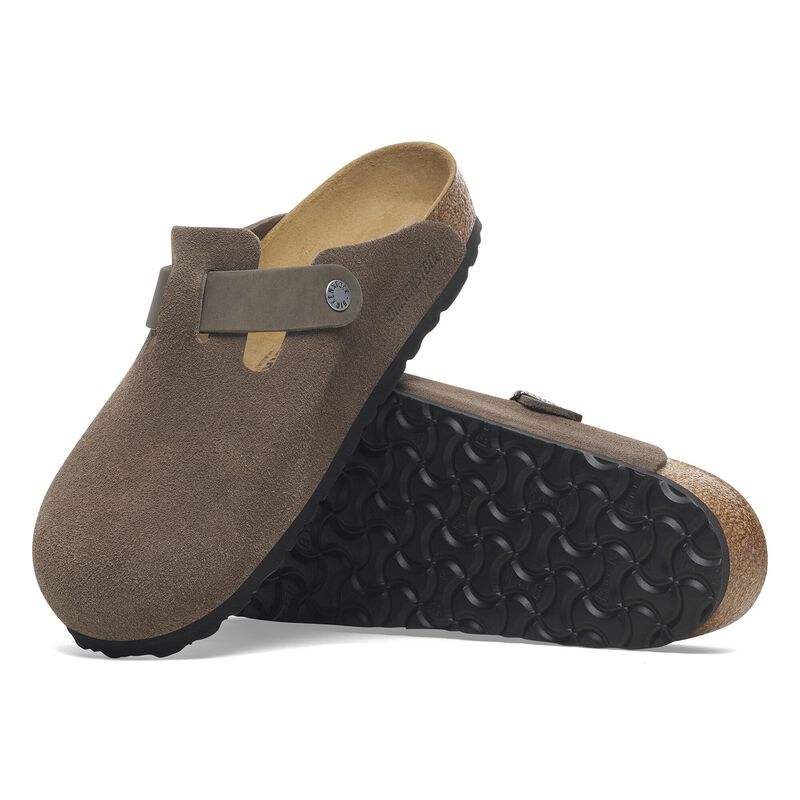
The outsole also matters. The Boston has a flexible sole that grips most indoor surfaces. On wet tile, be careful until the sole scuffs in. On carpet, you will feel the cork working more because the carpet gives a little. On concrete, the cork is doing all the work. That is why break-in should include different surfaces. Walk on a hard floor for ten minutes, then on a rug for ten minutes, then outside on pavement. This variety helps the cork adapt evenly. If you feel a persistent pressure point, check your strap fit. A loose strap lets your foot slide forward, putting pressure on your toes. A tight strap presses the arch too hard. Adjust and try again.

The Role of the Lounge Fit Width
BIRKENSTOCK offers different widths, and the Lounge Fit is a more relaxed fit. It gives extra room across the ball of the foot and the instep. For the Boston, that means less pressure on the top of your foot and more space for your toes to spread. If you are between sizes, the Lounge Fit can be more forgiving. But it is not a substitute for the right length. Your heel should sit in the heel cup, not on the edge. Your toes should not touch the front rim. A thumb's width of space in front is about right. The cork footbed will mold to your foot, but it will not lengthen. So get the length right first, then use the strap and the Lounge Fit width to fine-tune the volume.
People with wider feet often find that the Boston in Lounge Fit reduces the break-in time because there is less pressure on the sides. People with narrower feet might need to tighten the strap more or choose a different width. Either way, the first week is about listening to your feet. If you feel pinching on the sides, the width might be too narrow. If you feel your foot sliding side to side, the width might be too wide. The Concrete Gray mixed leather will soften, but it will not change the fundamental fit. So be honest with yourself in the first three days.
Matching the Boston to Your Day: City, Home, and Weekend
City streets are a great testing ground for the Boston. You will walk on concrete sidewalks, step over curbs, and stand on public transit. The cork footbed handles the impact, but you need to keep your stride natural. Do not grip with your toes. Let the footbed support your arch. The strap should keep your foot from sliding forward when you stop suddenly. In the first week, keep city walks under an hour. If you need to go longer, bring a backup pair or plan a rest. The Boston is not a running shoe; it is a walking shoe for everyday pace.
At home, the Boston is a natural house shoe. On hardwood and tile, you will appreciate the cork after a few days. The Concrete Gray leather is easy to wipe clean if you spill coffee or step in something. For weekend travel, the Boston packs flat and works as a slip-on for airport security and hotel rooms. The mixed leather holds up to repeated handling. Just remember that travel often means more walking than usual. If you are breaking in a new pair, do not plan a ten-mile sightseeing day on day two. Wear them around the hotel, then switch to a broken-in pair for the big walk.
Color Choices and How They Wear Through Break-In
Every color in this Boston Mixed Leather line shares the same cork footbed and the same break-in timeline, but the leather finish affects how they age. Cognac develops a rich patina with lighter creases. Concrete Gray stays neutral and hides dust. Faded Khaki shows scuffs more readily, so it is better for dry days. Charcoal is forgiving and looks dressier. Thyme is a conversation piece that pairs well with olive and brown. Midnight Blue and New Navy are deep and resist showing stains. Dark Tea is the classic choice for a reason: it looks better with every wear. Pick the color that matches your routine, but do not let color distract you from fit. A well-fitting Boston in any color beats a poorly fitting one in your favorite shade.
During the first week, you might notice that the leather darkens slightly where it flexes. That is normal for mixed leather. It is not dirt; it is the natural oils moving. You can brush it with a soft brush to even it out. Do not use harsh cleaners. A damp cloth is enough for Concrete Gray and Charcoal. For Cognac and Dark Tea, a neutral leather conditioner after the first month will keep them supple. The cork footbed does not need conditioner, but it does need air. Let the Bostons rest overnight without wearing them, so the cork can dry out. If your feet sweat, this is especially important.
Common First-Week Mistakes and How to Avoid Them
The biggest mistake is wearing the Boston for too long too soon. The cork footbed is not broken in until it has molded to your foot, and that takes time. If you push through pain, you can create hot spots that make you avoid the shoes. Instead, wear them for short periods, increasing by fifteen minutes each day. Another mistake is ignoring the strap. A loose strap feels comfortable for five minutes, then your foot slides and you start gripping. A tight strap feels secure for five minutes, then your foot goes numb. Adjust as needed, even mid-walk. Finally, do not compare the Boston to a padded sneaker. The cork footbed is firm by design. It supports rather than cushions. That firmness is what makes it comfortable for long-term wear, but it feels different at first.
If you have flat feet or high arches, pay extra attention to the arch support. The cork will mold, but it will not change its basic shape. If the arch feels too aggressive, try a thinner sock or loosen the strap. If it feels too flat, you may need a different footbed style. The Boston is not for everyone, but for many people, it becomes the most comfortable shoe they own after the first week. Give it a fair chance.
When the Break-In Is Done: What to Expect
By the end of the first week, the cork footbed should feel noticeably different. It will be warmer, slightly darker, and molded to your heel and arch. The leather will have creases that match your foot's flex points. The strap will have settled into its final hole. You will be able to walk on hard floors for an hour without thinking about your feet. That is the payoff. From there, the Boston becomes a daily go-to for city errands, home lounging, and weekend trips. The Concrete Gray version is particularly good for travel because it does not show every scuff. But whatever color you chose, the break-in process is the same. Treat the first week as a partnership between your foot and the cork. Be patient, adjust the strap, and vary your surfaces. The Boston Mixed Leather will reward you with a fit that feels custom-made.
Remember that BIRKENSTOCK cork footbeds are designed to be replaced if they wear out, but with proper care, they last for years. Keep them dry, let them air out, and avoid leaving them in a hot car. The mixed leather upper can be cleaned with a damp cloth and a little mild soap. Do not submerge them in water. If the cork starts to crack, that is a sign of extreme dryness; a cork sealer can help. But in the first week, you are unlikely to see any of that. You are just getting started. Enjoy the process, and let the Boston become your everyday walk companion.
View this BIRKENSTOCK style in the shop
People also search
BIRKENSTOCK sandals for sightseeing Europe cobblestones
how to stop heel slipping in BIRKENSTOCK Arizona
BIRKENSTOCK Arizona for summer walking all day
best BIRKENSTOCK for city walking tour
how to stretch tight BIRKENSTOCK sandals at home
BIRKENSTOCK Arizona midnight vs black oiled leather
BIRKENSTOCK sandals waterproof options EVA
best color BIRKENSTOCK Arizona for everyday
BIRKENSTOCK Arizona vegan Birko-Flor vs leather
best BIRKENSTOCK for airport travel and long flights
BIRKENSTOCK sandals for plantar comfort walking
BIRKENSTOCK Boston clog with socks in cold weather
BIRKENSTOCK Arizona outfit with linen summer clothes
BIRKENSTOCK Arizona vs Milano for ankle support
are BIRKENSTOCK sandals good for cobblestone city streets
BIRKENSTOCK Arizona mocha vs dark brown
is BIRKENSTOCK Boston Mixed Leather Concrete Gray Lounge Fit true to size
BIRKENSTOCK EVA sandals for beach and pool
BIRKENSTOCK Boston shearling vs regular Boston
BIRKENSTOCK Madrid vs Arizona for travel days
BIRKENSTOCK cork latex footbed how long it lasts
BIRKENSTOCK Boston suede water stains how to clean
BIRKENSTOCK footbed packed out when to replace
how to choose BIRKENSTOCK width letter R or N
do BIRKENSTOCK sandals run small or large
BIRKENSTOCK Arizona mink vs tobacco oiled leather
how often to replace BIRKENSTOCK cork footbed
how to clean BIRKENSTOCK Birko-Flor without damage
BIRKENSTOCK Arizona vs Super-Birki garden clog
BIRKENSTOCK Arizona two strap sandal fit true to size
Trending BIRKENSTOCK searches
break-in cork footbed
BIRKENSTOCK cork footbed
BIRKENSTOCK tobacco leather
BIRKENSTOCK oiled leather
BIRKENSTOCK Milano
Boston Mixed Leather Concrete Gray Lounge Fit cork footbed
BIRKENSTOCK white Arizona
Arizona vs Madrid
ankle strap Milano
BIRKENSTOCK original footbed
BIRKENSTOCK city walking
all day walking sandals
BIRKENSTOCK Kyoto clog
Birkenstock clog socks
summer BIRKENSTOCK outfits
BIRKENSTOCK travel sandals
Boston vs Kyoto
BIRKENSTOCK stone Arizona
arch support sandals
BIRKENSTOCK Birko-Flor