



Function
BIRKENSTOCK Buckley Suede Leather Tea Walk Edit: Adaptación en la primera semana, ajuste de la correa y comodidad en suelos duros · BIRKENSTOCK Everyday Walk
Why the Buckley Suede Leather Feels Different in the First Week
The BIRKENSTOCK Buckley is a closed-toe, casual shoe built on the same cork footbed that made the brand famous. In suede leather, it has a softer, more flexible character than smooth leather versions, which changes how the first week feels. If you are used to sneakers with foam cushioning, the Buckley will feel firm at first. That firmness is the point: the cork and latex footbed is designed to adapt to your foot over time, not to pillow it from day one. The suede upper also stretches slightly, so the shoe starts snug and then relaxes. This guide walks through what actually happens during the first seven days, with specific attention to the cork footbed break-in, strap fit, and walking on hard floors like tile, concrete, and hardwood.
What to Expect from the Cork Footbed in Days 1–3
When you first slide into the Buckley, the footbed will feel hard and slightly convex under your arch. That is normal. The cork-latex core is rigid out of the box, and the suede lining on top is not yet compressed. In the first two or three days, you will notice pressure under the arch and along the outside edge of your foot. This is the footbed beginning to map your footprint. The key is to wear them for short periods—thirty to sixty minutes at a time—rather than all day immediately. Each time you take them off, the cork continues to settle. By day three, most people feel a noticeable dip forming under the ball of the foot and heel. The Buckley does not require a painful break-in, but it does require patience. If you have high arches, the initial arch contact may feel intense; that usually fades as the footbed compresses. If you have flat feet, you may feel the arch support more than expected, which is a sign the footbed is doing its job.
Days 4–7: The Footbed Starts to Give
By the fourth day, the cork footbed has started to soften in the areas where you press hardest. The heel cup becomes more accommodating, and the toe area feels less rigid. This is when the Buckley begins to feel like it belongs to you. The suede leather upper also starts to mold around the top of your foot, especially across the instep. You may notice the shoe feels slightly looser than it did on day one, even though you haven't adjusted the strap. That is the combined effect of the footbed compressing and the suede stretching. During this phase, it helps to alternate the Buckley with another pair of shoes so your feet don't get fatigued by the new support. By day seven, the footbed should have a visible imprint of your foot, and the shoe should feel noticeably more comfortable than it did initially. If it still feels tight or painful after a full week of gradual wear, check your sizing or strap adjustment before assuming the shoe is wrong for you.
How to Dial In the Strap Fit
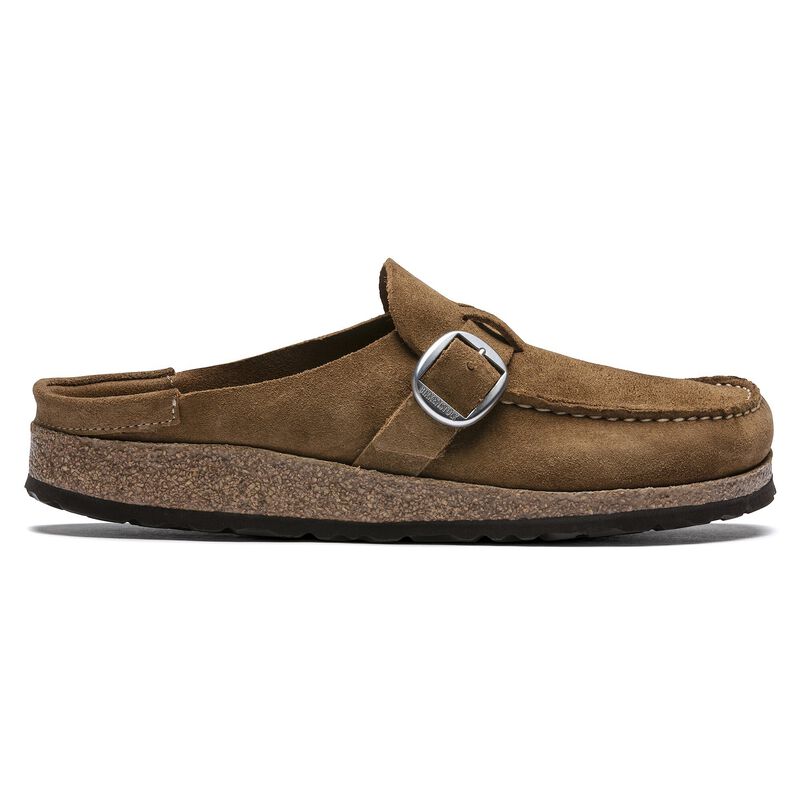
The Buckley has a single adjustable strap across the instep, secured with a metal buckle. Getting this strap right is the difference between a shoe that feels secure and one that feels either sloppy or restrictive. Start with the strap in the middle hole. You should be able to slide one finger under the strap without forcing it. If the strap leaves a deep mark on your foot or makes your toes tingle, it is too tight. If your heel lifts significantly when you walk, it is too loose. Because suede stretches, you may need to tighten the strap after the first few days. Check the fit after an hour of walking, not just when you first put them on. The buckle should sit flat against the strap, not dig into your foot. For those with a high instep, you may need to use the last hole; for a low instep, the first hole might be necessary. The Buckley's strap is not meant to be cranked down—it is there to keep the shoe on your foot while the footbed does the real work.
Walking on Hard Floors: Tile, Concrete, and Hardwood
Hard floors are where the Buckley's cork footbed proves its worth. Unlike soft foam, cork does not collapse under repeated impact; it absorbs shock and returns energy. On tile or concrete, you will feel the firmness, but you will also feel the support. The footbed's heel cup stabilizes your stride, and the arch support reduces the feeling of flat, unforgiving ground. In the first week, limit your hard-floor walking to short stretches. Your feet are adjusting to a new kind of support, and overdoing it can lead to sore arches. If you work on concrete all day, wear the Buckley for a few hours and then switch to another shoe. By the end of the first week, you should be able to spend a full day on hard floors without discomfort. The suede leather outsole—actually, the Buckley has a flexible rubber outsole—provides grip, but it is not a heavy-duty walking shoe. It is best for city streets, home floors, and light weekend travel.
City Streets and Weekend Travel
The Buckley is a city shoe. It handles pavement, crosswalks, and subway stairs without complaint. The closed toe protects your feet from the elements, and the suede leather looks casual but put-together. For weekend travel, the Buckley packs easily and works with jeans, chinos, or casual dresses. On a trip, wear them on the plane or train to keep your feet moving, but be prepared for the footbed to feel different on unfamiliar surfaces. Airport terminals and train stations are hard floors, so the same break-in rules apply. If you are walking long distances, consider bringing a second pair of shoes to alternate. The Buckley is not a hiking boot; it is a comfortable everyday shoe that gets better with time. The suede leather will show scuffs and creases, which is part of its character. A quick brush with a suede brush can refresh the nap.
Colors and Materials: Navy, Tea, Gray Taupe, Black
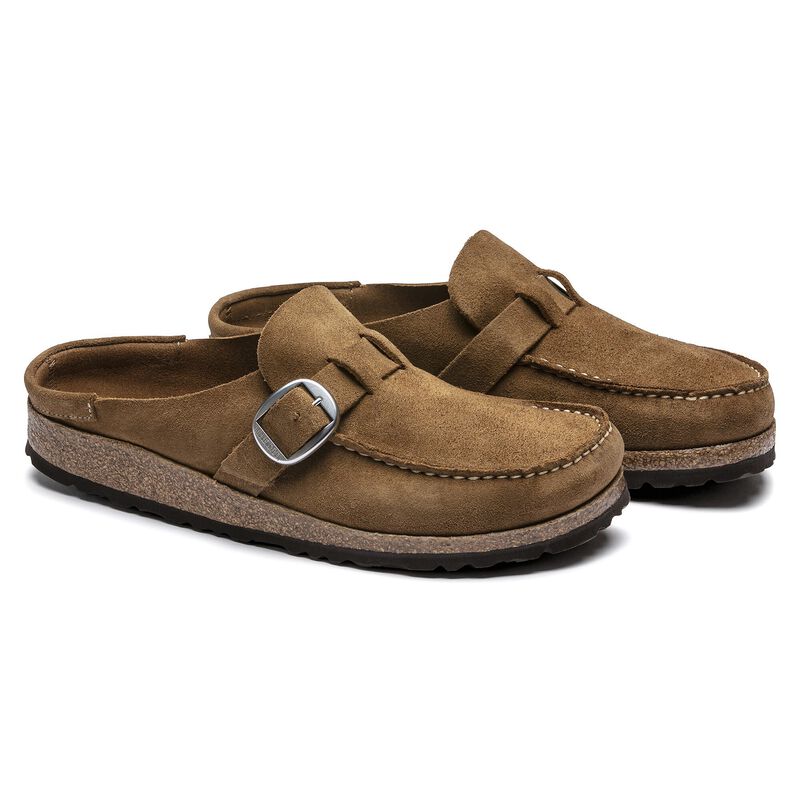
The Buckley Suede Leather comes in four colors: Navy, Tea, Gray Taupe, and Black. Navy is a deep, versatile blue that pairs well with denim and dark trousers. Tea is a warm, neutral tan that works with earth tones and light summer clothing. Gray Taupe is a muted, sophisticated gray-brown that straddles casual and smart-casual. Black is classic and understated, good for city wear and evenings out. All four use suede leather, which is softer and more breathable than smooth leather but requires a bit more care. The suede will stretch slightly with wear, so the initial fit should be snug but not tight. The cork footbed is lined with suede in the Buckley, which adds to the overall softness. The footbed itself is made of cork and latex, with a suede lining, and it is the same design used across many BIRKENSTOCK styles. The outsole is flexible rubber, which provides traction without adding weight.
Width, Sizing, and Fit Notes
BIRKENSTOCK offers the Buckley in narrow and regular widths. If you have never worn BIRKENSTOCK before, start by measuring your feet and checking the brand's size chart. The Buckley fits true to size for most people, but the suede upper means it will feel slightly snugger than a smooth leather version at first. If you are between sizes, consider sizing up, especially if you have a wide foot or high instep. The strap helps secure the fit, but it cannot compensate for a shoe that is too short. The footbed should feel like a firm handshake, not a vice. Your toes should not touch the front of the shoe when you stand, and your heel should sit centered in the heel cup. During the first week, the suede will stretch, so a slightly snug fit is better than a loose one. If you have orthotics, the Buckley's footbed is removable, but the shoe is designed to be worn with the footbed in place.
Break-In Tips for the First Week
To make the first week as smooth as possible, follow a few simple rules. Wear the Buckley for short periods at first—twenty minutes on day one, then add ten to fifteen minutes each day. Wear them around the house on hard floors to get used to the footbed before taking them outside. Avoid wearing them for a full workday until day five or six. If you feel hot spots, take the shoes off and let your feet cool down. Do not try to soften the footbed with water or heat; that can damage the cork. Instead, let your body heat and weight do the work. Keep the strap adjusted so your heel stays in place but your instep is not compressed. If you have particularly sensitive feet, consider wearing thin socks during the first week to reduce friction. By day seven, the Buckley should feel like a different shoe—more supportive, more flexible, and more comfortable. That is the cork footbed doing its job.
Care and Maintenance for Suede Leather
Suede leather needs a little attention to stay looking good. Brush off dirt with a suede brush or a soft cloth. If the suede gets wet, let it dry naturally, away from direct heat. Do not use a hair dryer or radiator. For stains, use a suede eraser or a specialized suede cleaner. The cork footbed can be wiped with a damp cloth, but do not soak it. Over time, the footbed may darken from sweat and wear, which is normal and does not affect performance. If the suede lining on the footbed becomes worn, you can replace the footbed with a new BIRKENSTOCK footbed, but the Buckley's footbed is not easily removable without tools. The rubber outsole can be cleaned with mild soap and water. With proper care, the Buckley will last for years, and the footbed will continue to mold to your feet.
Final Thoughts: Who the Buckley Is For
The BIRKENSTOCK Buckley Suede Leather is for anyone who wants a closed-toe shoe with the support of a cork footbed. It is ideal for city dwellers, weekend travelers, and anyone who spends time on hard floors. The first week requires patience, but the payoff is a shoe that feels custom-made. If you are looking for instant pillow-soft comfort, this is not the shoe for you. If you want a shoe that supports your feet and gets better with every wear, the Buckley is a smart choice. The suede leather in Navy, Tea, Gray Taupe, or Black gives you options for different outfits, and the adjustable strap ensures a secure fit. Give it a week, and you will understand why BIRKENSTOCK has been making cork footbeds for decades.
View this BIRKENSTOCK style in the shop
People also search
BIRKENSTOCK Boston break in time first week
BIRKENSTOCK Arizona metallic vs classic leather
BIRKENSTOCK Arizona for men first pair guide
BIRKENSTOCK Arizona oiled leather darkens over time
BIRKENSTOCK Arizona vs Milano for ankle support
BIRKENSTOCK Arizona white Birko-Flor scuff care
BIRKENSTOCK Madrid vs Arizona for travel days
are backless BIRKENSTOCK clogs good for walking
best BIRKENSTOCK for airport travel and long flights
can you wear BIRKENSTOCK Boston in rain
BIRKENSTOCK Arizona vs Boston which is better for walking
BIRKENSTOCK suede vs nubuck which scuffs less
BIRKENSTOCK Boston fit compared to Arizona
best BIRKENSTOCK for city walking tour
best BIRKENSTOCK for weekend travel packing
BIRKENSTOCK footbed packed out when to replace
BIRKENSTOCK Arizona for wide feet reddit fit
BIRKENSTOCK Boston clog with socks in cold weather
BIRKENSTOCK kids vs adult sizing for small feet
BIRKENSTOCK Arizona vs Super-Birki garden clog
how to stretch tight BIRKENSTOCK sandals at home
BIRKENSTOCK Arizona taupe vs stone vs black which to buy
BIRKENSTOCK EVA sandals for beach and pool
BIRKENSTOCK Mayari toe loop vs Gizeh fit
BIRKENSTOCK Arizona regular width vs wide fit guide
BIRKENSTOCK Madrid big buckle trend 2026
is BIRKENSTOCK Buckley Suede Leather Tea Walk Edit true to size
BIRKENSTOCK Boston shearling vs regular Boston
BIRKENSTOCK sizing EU to US conversion chart
BIRKENSTOCK sandals for nurses and long shifts
Trending BIRKENSTOCK searches
BIRKENSTOCK stone Arizona
BIRKENSTOCK Milano
BIRKENSTOCK soft footbed
Buckley Suede Leather Tea Walk Edit oiled leather
summer BIRKENSTOCK outfits
BIRKENSTOCK Big Buckle
BIRKENSTOCK oiled leather
Boston vs Kyoto
Buckley Suede Leather Tea Walk Edit cork footbed
BIRKENSTOCK mink oiled leather
BIRKENSTOCK white Arizona
BIRKENSTOCK cork footbed
ankle strap Milano
BIRKENSTOCK Madrid sandal
BIRKENSTOCK shearling Boston
BIRKENSTOCK Kyoto clog
thong sandal Gizeh
BIRKENSTOCK beach EVA
BIRKENSTOCK for work standing
BIRKENSTOCK Mayari