



Function
Boston Suede Leather Charcoal Trail Easy: Einlaufen des Kork-Fußbetts in der ersten Woche und Riemenanpassung | BIRKENSTOCK Everyday Walk
Why the Boston Suede Leather Charcoal Trail Easy Feels Different on Day One
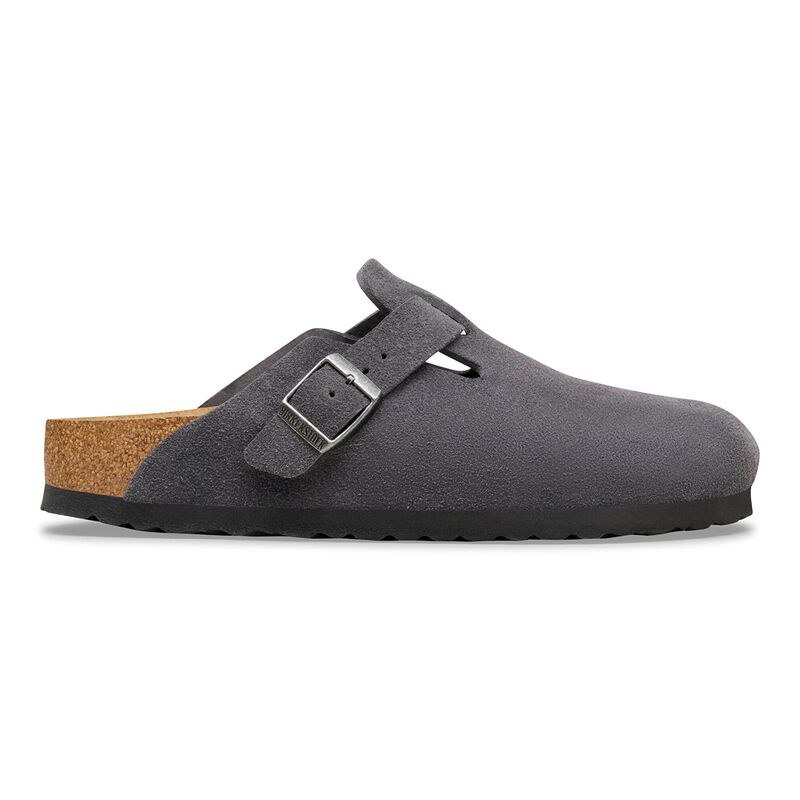
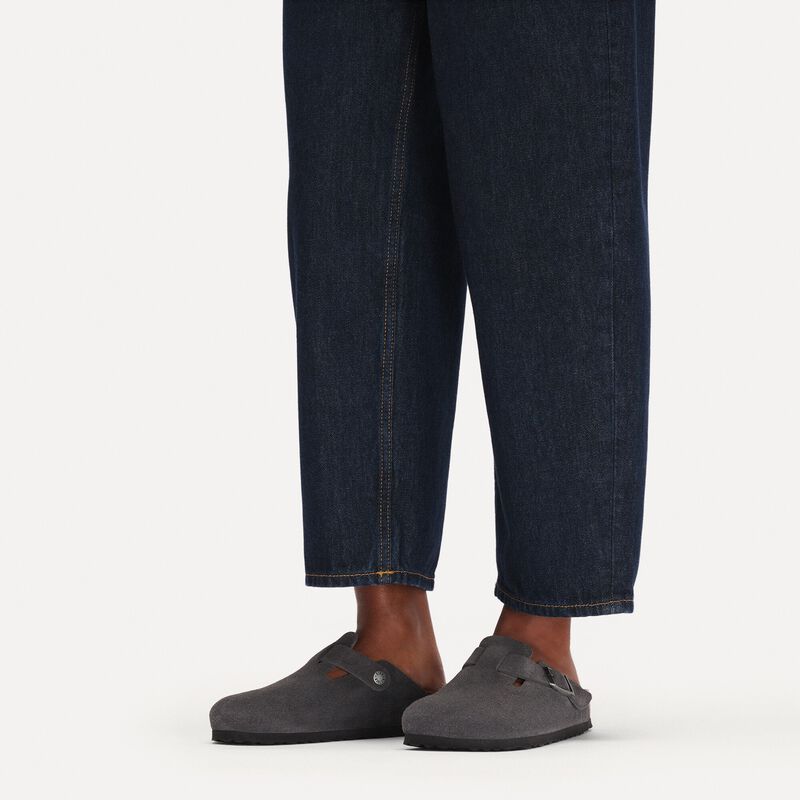
The Boston Suede Leather Charcoal Trail Easy is a clog that asks for a little patience and gives back a lot of comfort. Out of the box, the suede leather upper is soft but structured, and the cork footbed is firm. That firmness is not a flaw; it is the starting point of a footbed that will gradually mold to your foot. The Charcoal Trail Easy colorway is a deep, wearable grey that hides scuffs well, making it a natural choice for city streets, home floors, and weekend travel. But before you get to that broken-in bliss, you need to understand the first week. This is not a shoe you wear for a ten-mile hike on day one. It is a shoe you introduce to your feet gradually, letting the cork and suede do their work.
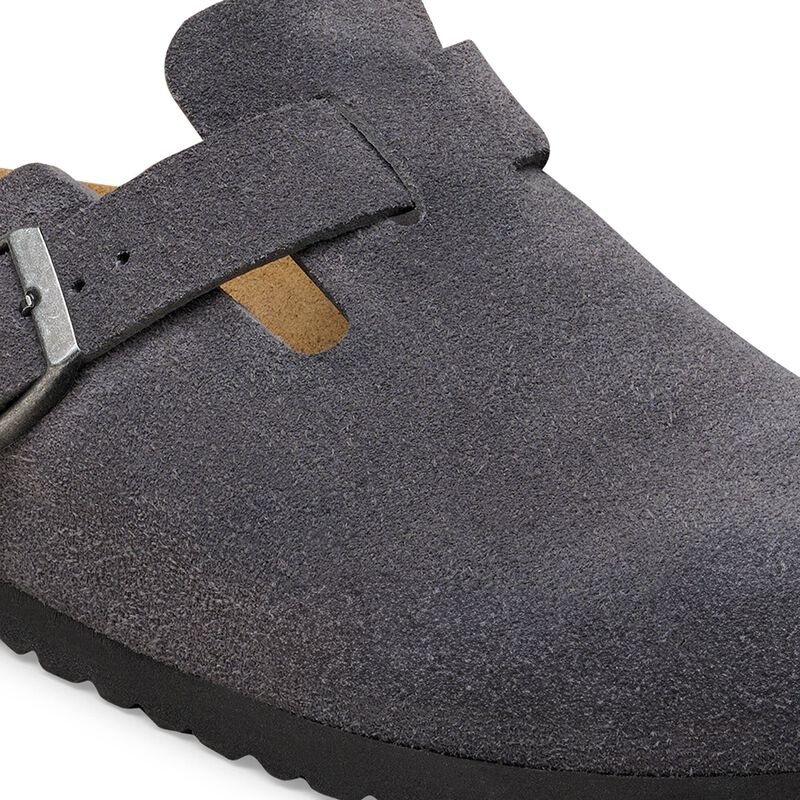
When you first slip your foot into the Boston, you will notice the raised edges of the footbed. The toe bar, the heel cup, and the arch support are all there, but they feel pronounced. That is intentional. The cork footbed is designed to soften and adapt to your unique pressure points. In the first few days, you might feel a slight pressure under your arch or along the outside of your foot. That is the footbed beginning to respond to your weight and gait. The suede leather upper also starts to stretch and flex, especially across the instep. The strap across the top is adjustable, and getting that adjustment right is key to a smooth break-in.
How to Adjust the Strap for the First Week
The Boston has a single strap with a metal buckle. It is not just decorative; it controls how secure the clog feels and how much your foot can move inside. On day one, fasten the strap so it is snug but not tight. You should be able to slide one finger under the strap without much resistance. If the strap is too loose, your heel will lift excessively when you walk, causing friction. If it is too tight, you will feel pressure on the top of your foot, and the suede may stretch unevenly. A good starting point is the middle hole. Wear it around the house for an hour. If you feel your foot sliding forward, tighten one hole. If you feel pinching, loosen one hole. The goal is to keep your foot centered over the cork footbed so the molding process happens evenly.
During the first week, check the strap tension daily. Suede leather softens with warmth and movement, so what felt snug on Monday might feel loose by Wednesday. Adjust as needed. Many people find that after a few days, they need to go one hole tighter because the suede has relaxed. That is normal. The strap is there to keep the Boston from flopping, but it should never cut into your skin. If you have a high instep, you might need to start on the loosest hole and only tighten after the suede has stretched. If you have a narrow foot, you might start on the tightest hole and then loosen as the footbed molds. Pay attention to how your foot sits; the strap is your main tool for a personalized fit.
Walking on Hard Floors: What to Expect
Hard floors—tile, concrete, hardwood, and laminate—are the true test of any footbed. The Boston Suede Leather Charcoal Trail Easy has a cork footbed that is naturally shock-absorbing, but it takes a few days to feel that benefit. On day one, walking on a hard floor might feel jarring compared to a cushioned sneaker. That is because the cork is still dense and unyielding. Your feet are also not used to the contoured shape. Limit your initial wear to 30–60 minutes at a time. Walk around your home, stand at the kitchen counter, or take a short walk around the block. Each session helps the cork warm up and compress slightly in the areas where you put the most pressure.
By day three or four, you should notice a difference. The footbed will start to feel less like a rigid platform and more like a custom insole. The heel cup will feel less aggressive, and the arch support will feel more like a gentle cradle. On hard floors, this translates to less fatigue in your heels and knees. The suede leather upper also becomes more pliable, so it moves with your foot instead of against it. If you are standing for long periods, the Boston is a good choice because the cork footbed distributes weight evenly. But do not rush it. If your feet feel sore after a session, take a break. The break-in process is about repetition, not endurance.
The Cork Footbed: A Living Material
Cork is harvested from the bark of cork oak trees, and it has a unique ability to compress and rebound. In the Boston, the cork is mixed with latex and jute to create a footbed that is both supportive and adaptive. During the first week, your body heat and the pressure of walking cause the cork to soften slightly. The footbed begins to take on the shape of your heel, arch, and toes. This is why no two pairs of BIRKENSTOCK feel exactly the same after a few months. The Charcoal Trail Easy has the same classic footbed as other Boston models, so the break-in timeline is similar. However, the suede leather upper may feel softer from the start than smooth leather, which can make the initial period more comfortable. Still, the footbed is the star. Give it time, and it will reward you.
To help the process, wear your Boston with socks for the first few days. Socks reduce friction and absorb moisture, which keeps the suede clean and allows the footbed to mold without excessive slipping. Once the footbed starts to show the imprint of your foot—usually around day five to seven—you can switch to bare feet if you prefer. Some people find that the footbed feels cooler and more breathable without socks, but that is a personal choice. Just remember that suede leather is sensitive to moisture, so if you sweat a lot, socks are a good idea. Also, avoid wearing your Boston in wet conditions during the first week; the cork can be damaged by prolonged moisture, and the suede will stain.
Choosing the Right Size and Width
The Boston Suede Leather Charcoal Trail Easy comes in a range of colors: Brown, Mauve, Ultra Blue, Stone Coin, Faded Khaki, Charcoal, Bold Green, Thyme, Antique White, Digital Green, and Pure Sage. No matter which color you choose, the fit is the same. BIRKENSTOCK offers two widths: narrow and regular. If you have never worn BIRKENSTOCK before, you might be unsure which to pick. A good rule of thumb is to stand on a piece of paper and trace your foot. If your foot is narrow, choose narrow. If it is average to wide, choose regular. The Boston has a roomy toe box, so your toes should have plenty of space to move. Your heel should sit squarely in the heel cup, and your arch should align with the footbed's arch. If your toes touch the front edge, go up a size. If your heel hangs over the back, go up a size. The strap can compensate for minor width issues, but the length of the footbed is not adjustable.
During the first week, you might notice that the footbed feels a bit long or short as it molds. That is normal. The cork compresses where you press hardest, which can change how the footbed feels under your foot. If you are between sizes, it is usually better to go with the larger size because the footbed will mold to your foot and create a custom fit. A too-small footbed can cause your toes to jam against the front, leading to discomfort. The Boston is available in whole sizes, so if you normally wear a half size, you may need to try both the smaller and larger size to see which works best. Many people find that the Boston runs true to size, but the width option is just as important.
First-Week Schedule: A Simple Plan
To make the break-in as smooth as possible, follow a gradual schedule. On day one, wear your Boston for 30 minutes indoors. Focus on walking on different surfaces—carpet, tile, wood—to get a feel for the footbed. On day two, wear them for an hour, including some standing. On day three, wear them for two hours, and take a short walk outside. By day four, you can wear them for half a day, but still avoid long distances. On day five, try a full day of wear, but keep activities light. By day six and seven, you should feel the footbed starting to conform. You can now wear them for longer periods, but still listen to your body. If you feel pain, take them off. The break-in should feel like a gentle stretching, not a punishment. Remember that everyone's feet are different, so your timeline may be faster or slower. The key is consistency and moderation.
During this week, also pay attention to your posture. The Boston has a slight heel-to-toe drop, which encourages a natural walking motion. On hard floors, this can feel different from flat shoes. Let your foot roll from heel to toe, and avoid slamming your heel down. The cork footbed will absorb some of the impact, but a smooth gait helps. If you are used to wearing cushioned sneakers, you might need to adjust your stride. The Boston is not a athletic shoe; it is a casual clog designed for everyday comfort. It rewards a relaxed, natural walk.
Troubleshooting Common First-Week Issues
Even with the best intentions, you might run into some common issues. If the strap rubs against your skin, try loosening it one hole or wearing a thin sock. If the footbed feels too hard, you can warm it up slightly with a hair dryer on low heat—but be careful not to overheat the cork. If your feet sweat excessively, consider using a foot powder or wearing moisture-wicking socks. If you feel pressure on the top of your foot, the strap might be too tight, or the suede needs to stretch. You can use a shoe stretcher, but often just wearing them with thick socks for a few hours can help. If the footbed feels too small, check your size again. The Boston should fit with a small amount of space at the front and back. If you have a high arch, you might feel more pressure initially; that is normal, and it will lessen as the footbed molds.
Another common issue is the sound. The Boston can make a slight clomping sound on hard floors, especially when new. This is due to the firm cork and the closed heel. As the footbed softens and the suede flexes, the sound diminishes. If the noise bothers you, try walking more softly or wearing them indoors first. Also, the outsole is made of EVA, which is durable but can be slippery on wet surfaces. Be cautious on smooth, wet floors. Over time, the outsole will scuff and provide better traction.
Beyond the First Week: Long-Term Care
Once you have broken in your Boston Suede Leather Charcoal Trail Easy, you will have a shoe that feels like it was made for you. To keep them in good condition, brush the suede regularly with a soft brush to remove dust and dirt. If they get wet, let them air dry away from direct heat. Do not put them in the washing machine or dryer. You can use a suede protector spray to guard against stains, but test it on a small area first. The cork footbed can be cleaned with a damp cloth and mild soap, but do not soak it. If the footbed starts to crack, you can use a cork sealer, which is available at many shoe repair shops. With proper care, your Boston will last for years, and the footbed will continue to mold to your feet.
Remember that the Boston is a versatile shoe. It works with jeans, casual pants, and even shorts. The Charcoal Trail Easy color is neutral enough to pair with almost anything, while the other colors—Brown, Mauve, Ultra Blue, Stone Coin, Faded Khaki, Bold Green, Thyme, Antique White, Digital Green, and Pure Sage—offer options for every style. Whether you are walking city streets, standing on hard floors at home, or traveling on weekends, the Boston Suede Leather Charcoal Trail Easy is a reliable companion. Just give it that first week, and it will give you back comfort that lasts.
View this BIRKENSTOCK style in the shop
People also search
how to stop heel slipping in BIRKENSTOCK Arizona
BIRKENSTOCK Arizona vs Boston which is better for walking
do BIRKENSTOCK sandals run small or large
how to choose BIRKENSTOCK width letter R or N
BIRKENSTOCK Arizona metallic vs classic leather
are BIRKENSTOCK cork footbed sandals good for all-day walking
BIRKENSTOCK Madrid big buckle trend 2026
BIRKENSTOCK Arizona white Birko-Flor scuff care
best BIRKENSTOCK for backyard home and errands
BIRKENSTOCK footbed sandals break-in no blisters
BIRKENSTOCK Milano ankle strap vs Arizona stability
BIRKENSTOCK sandals waterproof options EVA
BIRKENSTOCK Arizona outfit with linen summer clothes
are BIRKENSTOCK sandals good for cobblestone city streets
BIRKENSTOCK cork latex footbed how long it lasts
BIRKENSTOCK sizing EU to US conversion chart
how to store BIRKENSTOCK cork footbed between seasons
BIRKENSTOCK suede vs nubuck which scuffs less
BIRKENSTOCK footbed technology cork and latex
BIRKENSTOCK Arizona oiled leather darkens over time
BIRKENSTOCK kids vs adult sizing for small feet
BIRKENSTOCK Arizona Big Buckle vs classic Arizona
BIRKENSTOCK Mayari toe loop vs Gizeh fit
BIRKENSTOCK sizing guide regular vs wide width
are backless BIRKENSTOCK clogs good for walking
BIRKENSTOCK soft footbed vs original footbed difference
BIRKENSTOCK Arizona regular width vs wide fit guide
BIRKENSTOCK Boston suede water stains how to clean
how to break in BIRKENSTOCK Boston Suede Leather Charcoal Trail Easy cork footbed
best BIRKENSTOCK for city walking tour
Trending BIRKENSTOCK searches
BIRKENSTOCK 2026 trends
BIRKENSTOCK Kyoto clog
BIRKENSTOCK beach EVA
BIRKENSTOCK airport shoes
arch support sandals
BIRKENSTOCK for work standing
BIRKENSTOCK new colors
BIRKENSTOCK platform Arizona
BIRKENSTOCK cobblestone walking
BIRKENSTOCK unisex sizing
BIRKENSTOCK cork footbed
summer BIRKENSTOCK outfits
Boston Suede Leather Charcoal Trail Easy Birko-Flor
oiled leather clog care
BIRKENSTOCK vegan Birko-Flor
BIRKENSTOCK black Arizona
BIRKENSTOCK Boston Suede Leather Charcoal Trail Easy
BIRKENSTOCK Gizeh
Arizona vs Boston
Boston vs Kyoto