



Function
BIRKENSTOCK Kyoto Nubuck Leather Desert Buck Roast – Einlaufen in der ersten Woche, Riemenanpassung und Gehen auf hartem Boden · BIRKENSTOCK Everyday Walk
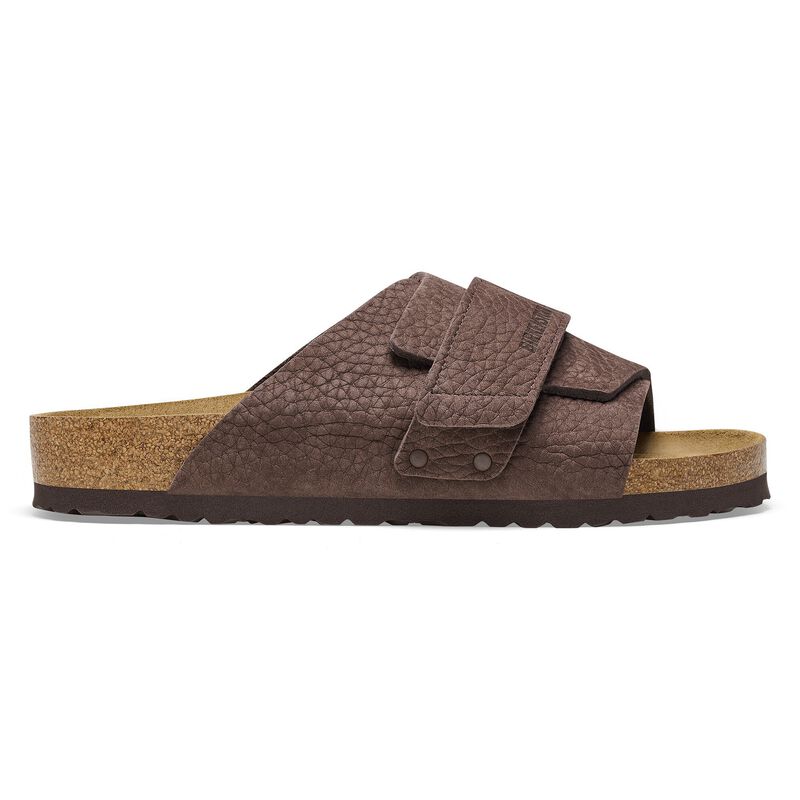
The BIRKENSTOCK Kyoto Nubuck Leather Desert Buck Roast is a closed-toe sandal that asks for a little patience in the first week. Unlike the open Arizona or Boston clog, the Kyoto wraps the foot with a strap over the instep and a closed heel. That means the cork footbed has more contact with your foot, and the straps need to find their place. If you are planning to wear these mostly on hard floors—kitchen tile, office laminate, concrete sidewalks—here is what to expect and how to make the first days comfortable.
First-Week Cork Footbed Break-In: What Really Happens
The cork footbed is the heart of every BIRKENSTOCK. It is not a soft foam insert; it is a molded layer of cork and latex that responds to your foot’s heat and pressure. In the first week, the footbed still feels firm, especially under the arch and the heel cup. You might notice a distinct edge along the sides where your foot has not yet pressed down. That is normal. Do not try to speed up the process by wearing them all day. Start with two to three hours, then take them off. Over the next days, the cork will compress slightly and form to your unique shape. The Kyoto’s closed back adds more friction than an open sandal, so your heel will feel the initial stiffness more. Keep wearing them on short walks around the house. By the end of week one, the footbed should start to feel less like a board and more like a supportive cradle.
Strap Fit: Finding the Right Tension
The Kyoto has two buckles: one at the instep and one at the ankle. The straps are made from nubuck leather, which is soft but still needs breaking in. In the first week, the leather will be a little stiff, and the buckles might feel tight. The trick is to start with a looser fit—just snug enough that your foot does not slide forward. The instep strap is the one that controls most of the movement. If it is too loose, your toes will hit the front edge when you walk downhill or on stairs. If it is too tight, you will feel pressure across the top of your foot. Use the buckle holes to adjust a half-hole at a time. The ankle strap should hold your heel in place without digging in. During the break-in period, the leather will stretch slightly, so a fit that feels snug on day one will become more comfortable by day seven. Do not ignore any hot spots on the sides of your foot; that means the straps are pressing too hard. Loosen them a bit and let your foot settle.
Walking on Hard Floors: The Real Test
Hard floors are the most common surface for the Kyoto, whether you are walking through a kitchen, a hallway with wood floors, or an office with tile. The cork footbed provides a firm yet flexible base that absorbs some shock, but it is not like a running shoe. The sole is relatively thin, so you feel the floor more than you would in a sneaker. That is part of the design: it encourages a more natural gait. In the first week, your feet and legs may feel tired because the muscles are working differently. This is especially true if you are used to cushioned shoes. Walk at a normal pace and let your heel land first, then roll through the ball of your foot. Avoid stomping, which can put unnecessary stress on the footbed before it has molded. On hard floors, you might notice a slight squeak from the leather straps rubbing against the footbed. That usually fades as the materials settle. If you are standing for long periods—like cooking or working at a standing desk—the cork will feel firmer than a foam insole. Take a break after an hour, sit down, and let your feet rest. Over time, your feet will adapt, and the cork will become more forgiving.
Color Choices and Everyday Wear
The Kyoto Nubuck Leather comes in several colorways, and each has a slightly different character. Desert Buck Roast is a warm, medium brown that works well with jeans or khakis. Desert Buck Whale Gray is a cooler, neutral gray that pairs with almost anything. Desert Buck Tea is a light, sandy tone that brightens up a casual outfit. Desert Buck Indigo Blue adds a subtle deep-blue tint, while Midnight Blue is a darker, almost navy shade. Desert Buck New Beige is a classic light beige that goes well with summer clothes. All colors are made from nubuck leather, which has a soft, brushed texture that shows scuffs over time. That is part of the appeal, but if you want to keep them looking their best, use a suede/nubuck brush and a protective spray. On hard floors, the leather will pick up scuffs from chair legs or curbs. A gentle brushing removes most marks. The straps will also darken slightly with wear, especially in lighter colors like Tea or New Beige. That is natural and gives each pair a unique patina.
Practical Tips for the First Seven Days
Day one: Wear the Kyoto around the house for two hours. Focus on the strap fit. Adjust the buckles until you feel a firm but not tight hold. Day two: Take a short walk outside, maybe 15 minutes. Expect some stiffness in the cork. Day three: Increase to four hours, but take them off for a lunch break. Day four: If you have a hot spot on your heel, add a thin moleskin pad inside the heel cup but do not use bulky insoles—they will ruin the footbed molding. Day five: Walk on a variety of surfaces, including carpet and concrete, to help the cork flex. Day six: The footbed should start to show an imprint of your foot. Day seven: If still uncomfortable in one spot, revisit the strap tension. Sometimes the instep strap needs to be tightened as the leather stretches. Also, check the width. The Kyoto is available in regular and wide widths. If your foot feels pinched along the sides, you might need the wide version. The width is marked inside the shoe. Most people do well with the regular width, but if you have a high instep or a wider forefoot, the wide width gives more room. The key is to not force the boot onto your foot. If it hurts to put on, you have the wrong size or width.
Why the Cork Footbed Matters More in the Kyoto
Unlike the Arizona, which exposes the footbed to air, the Kyoto covers more of your foot, so the cork warms up faster. That is an advantage because warmth softens the cork slightly, helping it mold quicker. But it also means that if you wear them without socks, your foot may sweat a little, which is normal. The cork is moisture-resistant, but you should let the shoes air out after each use. Do not wear the same pair two days in a row. Give them a day to dry and reshape. This is especially important in the first week when the cork is still settling. If you follow this routine, the footbed will conform to your foot within two to three weeks, and the Kyoto will feel like a custom fit. The nubuck leather straps will soften, the buckles will loosen just a bit, and the whole sandal will flex with your stride.
Hard Floors and Your Posture
Standing on hard floors for hours can make your lower back and calves ache if your shoes lack support. The Kyoto’s footbed has a pronounced arch support and a deep heel cup. That encourages proper alignment from your feet up to your spine. In the first week, you might feel your posture adjusting, which can cause mild muscle fatigue. That is a sign that your feet are working more naturally. To ease into it, wear the Kyoto for shorter periods and alternate with your usual shoes. As the cork molds to your arches, the pressure points become more comfortable. Many people notice that after the break-in, they can stand on tile or wood for longer without discomfort. The footbed also has a slight toe grip, a raised area at the front that helps your toes grip the sole. That tiny ridge takes time to get used to, but it improves balance on hard floors. If you feel the toe grip too much, make sure your foot is seated all the way back in the heel. If your toes are too close to the front, the grip presses on the wrong spot.
Strap Care and Longevity
The nubuck leather straps on the Desert Buck Roast version are durable but need a little care. Wipe off any dirt with a dry cloth. If they get wet, let them air dry away from direct heat. Use a nubuck conditioner after a few weeks to keep the leather supple. The buckles are metal and will not rust, but they can scratch. The straps are replaceable, but with proper care, they last for years. During the first week, the leather is still stiff, so be gentle when buckling and unbuckling. Do not force the prong through a tight hole; instead, loosen the strap first. Over time, the holes may stretch slightly, which is normal. If a hole stretches too much, you can have a cobbler add a new one. But with regular width and proper fit, you should not need to.
Final Thoughts on the First Week
The BIRKENSTOCK Kyoto Nubuck Leather Desert Buck Roast is a rugged, good-looking sandal that becomes more comfortable with each wear. The first week is a test of patience. The cork footbed feels hard, the straps feel stiff, and hard floors feel harder. But if you stick with the gradual break-in routine, you will be rewarded with a pair of shoes that support your feet in a way few others can. Take it slow, adjust the straps, and let the cork do its work. By the end of the week, you will start to see why BIRKENSTOCK wearers swear by the footbed. And if you are choosing between colors, Desert Buck Roast is a versatile option that hides dirt well, while lighter shades like Tea or New Beige show more character over time. No matter which color you pick, the Kyoto will become a go-to for walking on hard floors, whether you are at home, at work, or on the weekend.
View this BIRKENSTOCK style in the shop
People also search
BIRKENSTOCK Arizona metallic vs classic leather
best BIRKENSTOCK clog for indoor and outdoor
BIRKENSTOCK Milano ankle strap vs Arizona stability
BIRKENSTOCK Boston for office casual dress code
BIRKENSTOCK Boston break in time first week
BIRKENSTOCK soft footbed vs original footbed difference
BIRKENSTOCK footbed sandals for standing on hard floors
BIRKENSTOCK Boston fit compared to Arizona
BIRKENSTOCK oiled leather clog care rain and commute
best color for BIRKENSTOCK Kyoto Nubuck Leather Desert Buck Roast Walk Edit everyday wear
BIRKENSTOCK Arizona midnight vs black oiled leather
BIRKENSTOCK Kyoto vs Boston clog comparison
BIRKENSTOCK Arizona two strap sandal fit true to size
BIRKENSTOCK Boston clog with socks in cold weather
are BIRKENSTOCK sandals good for cobblestone city streets
BIRKENSTOCK Arizona mink vs tobacco oiled leather
how to stretch tight BIRKENSTOCK sandals at home
BIRKENSTOCK sandals for nurses and long shifts
BIRKENSTOCK footbed sandals break-in no blisters
BIRKENSTOCK Boston vs Milano which for commute
BIRKENSTOCK Arizona oiled leather darkens over time
BIRKENSTOCK men women unisex sizing how to choose
BIRKENSTOCK Arizona white vs black everyday wear
BIRKENSTOCK Kyoto Nubuck Leather Desert Buck Roast Walk Edit vs Arizona for walking
BIRKENSTOCK suede vs nubuck which scuffs less
BIRKENSTOCK sizing guide regular vs wide width
best BIRKENSTOCK for backyard home and errands
are BIRKENSTOCK good for standing cooking at home
BIRKENSTOCK Boston suede water stains how to clean
BIRKENSTOCK arch support sandals for sightseeing
Trending BIRKENSTOCK searches
BIRKENSTOCK unisex sizing
summer BIRKENSTOCK outfits
BIRKENSTOCK Big Buckle
Kyoto Nubuck Leather Desert Buck Roast Walk Edit Birko-Flor
arch support sandals
thong sandal Gizeh
Boston vs Kyoto
cork footbed care
BIRKENSTOCK shearling Boston
BIRKENSTOCK cobblestone walking
BIRKENSTOCK white Arizona
BIRKENSTOCK vegan Birko-Flor
BIRKENSTOCK Milano
BIRKENSTOCK mink oiled leather
BIRKENSTOCK soft footbed
BIRKENSTOCK tobacco leather
break-in cork footbed
BIRKENSTOCK Boston clog
ankle strap Milano
Arizona vs Madrid